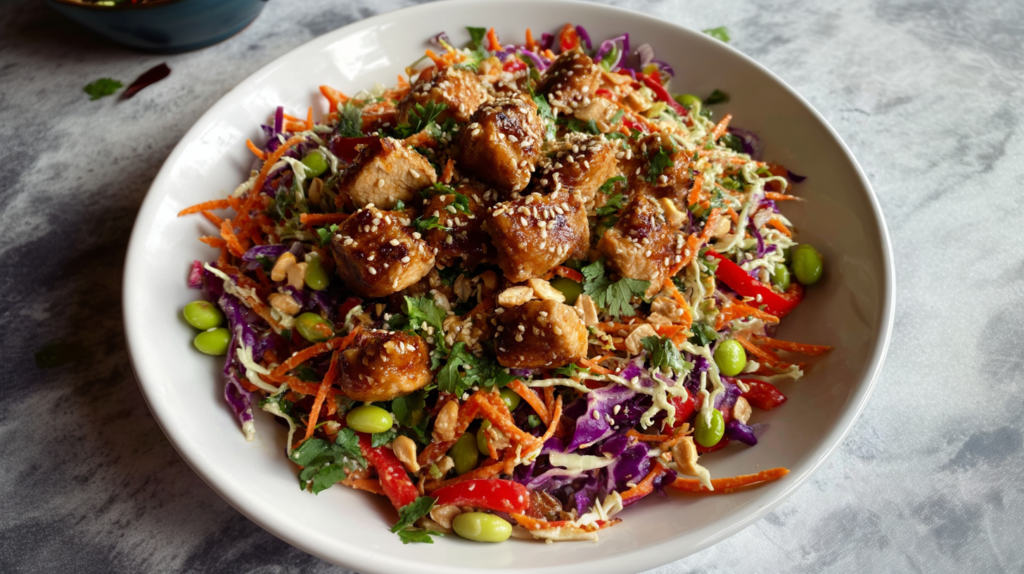
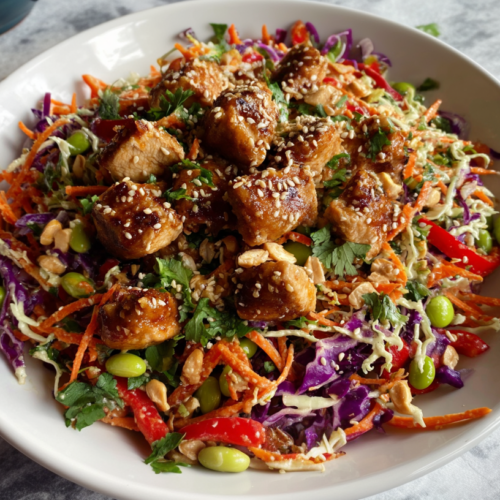
Asian Chicken Crunch Salad is a modern, flavor-forward dish designed for cooks who want freshness, texture, and protein-packed satisfaction in a single bowl. Inspired by classic Asian flavor profiles, this salad combines tender sesame-marinated chicken with an abundance of crisp vegetables, fresh herbs, and a rich peanut dressing that ties everything together. The appeal lies in its balance—cool, crunchy cabbage contrasts with warm, caramelized chicken, while the dressing delivers savory depth with hints of sweetness, acidity, and gentle heat. Each bite offers layers of flavor and texture, making it equally suited for meal prep, quick lunches, or light yet filling dinners. Bright, bold, and deeply satisfying, this salad delivers restaurant-quality results with simple, accessible ingredients.
Why This Recipe Works
This Asian Chicken Crunch Salad succeeds because it is intentionally built around contrast and balance. Every component serves a clear purpose, from the marinated chicken to the crisp vegetables and creamy dressing. The recipe combines classic Asian-inspired flavors with practical techniques that maximize texture, flavor absorption, and visual appeal. By separating warm and cool elements, bold and fresh notes, and soft and crunchy textures, the salad remains satisfying without feeling heavy or monotonous.
Flavor Layering
Flavor is introduced in stages rather than all at once. The chicken is marinated with soy sauce, aromatics, sesame oil, and brown sugar, allowing savory, umami-rich notes to penetrate the meat before cooking. During cooking, the marinade reduces slightly, creating a glossy coating that intensifies the flavor. The salad base remains fresh and neutral, acting as a crisp canvas that highlights the seasoned chicken. Finally, the peanut dressing adds richness, acidity, and subtle sweetness, rounding out the dish and ensuring every bite is well-balanced.
Technique
The techniques used in this recipe are simple but deliberate. Marinating the chicken ensures deep flavor without requiring long cooking times. Cooking the chicken separately prevents the salad from becoming soggy and preserves the crispness of the vegetables. Shredding the cabbage finely allows it to absorb dressing evenly while maintaining crunch. Whisking the dressing until fully emulsified creates a smooth, cohesive sauce that clings to each ingredient instead of pooling at the bottom of the bowl.
Cooking Logic
Each step follows a logical sequence designed for efficiency and optimal results. The chicken marinates while the vegetables are prepped, minimizing downtime. The dressing is made separately to allow flavor adjustment before assembly. The salad is tossed only when ready to serve, preserving texture and preventing excess moisture. This method ensures consistent results whether the salad is served immediately or portioned for meal prep.
Recipe Info
Prep Time: 15 minutes
Cook Time: 20 minutes
Total Time: 35 minutes
Yield: 4 servings
Category: Salads & Bowls
Cuisine: Asian-Inspired / Fusion
Ingredients
Sesame Chicken
1 lb (450 g) boneless, skinless chicken breast, cut into bite-size pieces
¼ cup (60 ml) low-sodium soy sauce or tamari
1 tbsp minced garlic
1–2 tbsp brown sugar, to taste
1 tbsp tahini
1 tbsp toasted sesame oil
1 tbsp rice vinegar
2 tsp freshly grated ginger
1 tbsp chili sauce
1 tbsp sesame seeds
Crunchy Salad Base
3 cups shredded purple cabbage
3 cups shredded green cabbage
1 cup shredded carrots
1 red bell pepper, thinly sliced
½ cup shelled edamame
½ cup chopped green onions
½ cup fresh cilantro, chopped
¼ cup chopped peanuts
Peanut Dressing
3 tbsp natural creamy peanut butter
2 tbsp rice vinegar
2 tbsp honey
1 tbsp toasted sesame oil
2 tbsp low-sodium soy sauce or tamari
1 tsp freshly grated ginger
1 tsp minced garlic
2 tsp chili sauce
2 tbsp warm water, plus more as needed
Ingredient Breakdown
Chicken Breast
Boneless, skinless chicken breast provides lean protein and a neutral base that readily absorbs the marinade. Cutting the chicken into small, uniform pieces ensures quick, even cooking and maximizes surface area for flavor development.
Soy Sauce or Tamari
This forms the backbone of the marinade and dressing, contributing saltiness and umami. Low-sodium options allow better control over seasoning while still delivering depth.
Brown Sugar
Brown sugar balances the salt and acidity in the marinade, helping the chicken caramelize slightly during cooking. Its molasses content adds subtle richness without overpowering the dish.
Tahini
Tahini adds a mild nuttiness and creamy body to the marinade, helping it cling to the chicken and enhancing overall mouthfeel.
Toasted Sesame Oil
Used sparingly, toasted sesame oil delivers a concentrated aroma and flavor that defines the Asian-inspired profile of the dish.
Rice Vinegar
Rice vinegar provides gentle acidity that brightens both the marinade and the dressing without sharpness, keeping the flavors clean and balanced.
Fresh Ginger and Garlic
These aromatics introduce warmth and complexity. Freshly grated ginger adds brightness, while garlic deepens the savory character of the chicken and dressing.
Chili Sauce
Chili sauce introduces controlled heat and subtle sweetness. The quantity can be adjusted to suit spice tolerance without altering the structure of the recipe.
Cabbage (Purple and Green)
Using two types of cabbage creates visual contrast and varied texture. Both hold up well to dressing, making them ideal for meal prep.
Carrots and Bell Pepper
These vegetables contribute natural sweetness, crunch, and color, balancing the savory elements of the dish.
Edamame
Edamame adds plant-based protein and a soft, creamy contrast to the crisp vegetables.
Fresh Herbs and Green Onions
Cilantro and green onions add freshness and lift, preventing the salad from tasting heavy or one-dimensional.
Peanuts
Chopped peanuts provide additional crunch and reinforce the nutty flavors found in the dressing.
Peanut Butter
The foundation of the dressing, peanut butter adds richness, body, and a savory-sweet flavor that ties all components together.
Honey
Honey softens the acidity of the vinegar and complements the peanut butter, creating a balanced, cohesive dressing.
Step-by-Step Instructions
Step 1: Marinate the Chicken
Begin by preparing the marinade for the chicken. In a medium mixing bowl, combine the soy sauce or tamari, minced garlic, brown sugar, tahini, toasted sesame oil, rice vinegar, freshly grated ginger, chili sauce, and sesame seeds. Whisk thoroughly until the mixture is smooth and fully emulsified. The tahini should be fully incorporated, with no visible streaks, creating a cohesive marinade that will cling evenly to the chicken.
Add the chicken pieces to the bowl and toss until each piece is well coated. Ensure that the marinade reaches all surfaces of the chicken, as this is where the primary flavor development occurs. Set the bowl aside and allow the chicken to marinate at room temperature while the remaining components are prepared. Even a short marination time enhances flavor penetration and improves overall texture during cooking.
Step 2: Prepare the Peanut Dressing
In a small bowl, add the peanut butter, rice vinegar, honey, toasted sesame oil, soy sauce or tamari, grated ginger, minced garlic, and chili sauce. Whisk until smooth and creamy. At first, the mixture may appear thick; gradually add warm water, one tablespoon at a time, whisking continuously until the dressing reaches a pourable yet slightly thick consistency.
Taste the dressing and adjust seasoning as needed. Additional honey may be added for sweetness, vinegar for acidity, or chili sauce for heat. Set the dressing aside to allow the flavors to meld while the salad base and chicken are prepared.
Step 3: Assemble the Salad Base
In a large mixing bowl, combine the shredded purple cabbage, shredded green cabbage, shredded carrots, sliced red bell pepper, edamame, chopped green onions, chopped cilantro, and peanuts. Toss gently to distribute the ingredients evenly without bruising the vegetables. This mixture should remain dry and crisp until just before serving to preserve texture.
Set the salad base aside at room temperature. Avoid adding dressing at this stage, as premature mixing can soften the vegetables and compromise the desired crunch.
Step 4: Cook the Chicken
Heat a large skillet over medium heat and add a small amount of neutral oil if needed. Once the skillet is hot, add the marinated chicken pieces in a single layer, allowing space between them to promote even browning. Cook for approximately 3 minutes per side, turning only when the chicken releases easily from the pan.
Once lightly browned, pour any remaining marinade into the skillet. Continue cooking, stirring occasionally, until the chicken is fully cooked through and reaches an internal temperature of 165°F (74°C). The marinade should reduce slightly, forming a glossy coating around the chicken. Remove the skillet from heat and allow the chicken to rest briefly before assembling the salad.
Step 5: Combine and Serve
Just before serving, drizzle the desired amount of peanut dressing over the salad base and toss gently until evenly coated. Add the warm sesame chicken and fold it into the salad, taking care not to overmix. The contrast between the warm chicken and cool vegetables enhances both flavor and texture.
Transfer the salad to a serving platter or individual bowls. Garnish with additional chopped cilantro or sesame seeds if desired. Serve immediately for the best texture and flavor experience.
Texture and Flavor Profile
This Asian Chicken Crunch Salad delivers a layered sensory experience with each bite. The chicken is tender and juicy, coated in a savory, slightly sweet glaze with subtle heat. The cabbage provides a firm, refreshing crunch, while the carrots and bell pepper add crispness and natural sweetness. Edamame contributes a soft, creamy contrast, and peanuts add a satisfying bite.
Flavor-wise, the salad balances umami-rich soy sauce, nutty sesame oil, bright acidity from rice vinegar, and gentle sweetness from brown sugar and honey. The peanut dressing ties all elements together, offering richness without heaviness. Fresh herbs and aromatics lift the dish, ensuring it remains vibrant and well-rounded rather than dense or overpowering.
Tips for Best Results
Use freshly shredded vegetables whenever possible. Pre-shredded cabbage mixes tend to release excess moisture and soften quickly, which diminishes the crisp texture that defines this salad. Freshly sliced cabbage maintains structure and delivers a cleaner crunch.
Cut the chicken into uniform, bite-size pieces to ensure even cooking. Consistent sizing prevents overcooking smaller pieces while allowing larger pieces to reach proper doneness.
Allow the skillet to heat fully before adding the chicken. A properly heated pan promotes caramelization, enhancing flavor through browning rather than steaming.
Avoid overcrowding the pan. If necessary, cook the chicken in batches. Overcrowding lowers the pan temperature and prevents proper browning, resulting in a softer texture and diluted flavor.
Reserve dressing until just before serving. Tossing the salad too early will soften the vegetables and compromise the crunch. If meal prepping, store dressing separately and combine only when ready to eat.
Adjust the peanut dressing consistency carefully. The dressing should coat the vegetables lightly without pooling at the bottom of the bowl. Add warm water gradually to maintain control over texture.
Taste and adjust seasoning at every stage. Balance between sweetness, acidity, salt, and heat is essential to achieving a cohesive final dish.
Variations
For a vegetarian version, substitute the chicken with baked tofu or roasted chickpeas. Toss tofu in the same marinade and roast at high heat until crisp around the edges before adding to the salad.
For a gluten-free option, ensure tamari or certified gluten-free soy sauce is used throughout the recipe, including the dressing.
For a low-sugar variation, reduce or omit the brown sugar in the marinade and replace honey in the dressing with a small amount of grated apple or date paste.
For additional crunch, add crispy wonton strips or toasted rice noodles just before serving.
For extra heat, increase the chili sauce in both the marinade and dressing or finish the salad with chili crisp or crushed red pepper flakes.
For a citrus-forward profile, add a splash of fresh lime juice to the dressing and a small amount of zest to brighten the overall flavor.
Serving Suggestions
Serve this Asian Chicken Crunch Salad as a complete meal on its own, ideal for lunch or a light dinner. Its balanced protein, fiber, and healthy fats make it both satisfying and energizing.
Pair the salad with steamed jasmine rice or rice noodles for a more substantial meal, especially when serving to a larger group or during colder months.
Serve alongside miso soup or a light broth-based soup for a cohesive Asian-inspired menu.
For entertaining, present the salad deconstructed on a large platter, allowing guests to assemble their own bowls with customizable dressing and toppings.
This salad also works well as a meal-prep option when stored properly, making it suitable for weekday lunches or quick dinners.
Storage and Reheating
Store the components of the Asian Chicken Crunch Salad separately to preserve texture and flavor. The cooked sesame chicken, fresh vegetables, and peanut dressing should each be placed in airtight containers and refrigerated individually.
The cooked chicken can be stored in the refrigerator for up to 4 days. Allow it to cool completely before sealing to prevent condensation, which can affect texture.
The chopped vegetables will keep well for 3–4 days when stored dry. If possible, line the storage container with a paper towel to absorb excess moisture and maintain crispness.
The peanut dressing can be refrigerated for up to 5 days. If it thickens during storage, whisk in a small amount of warm water before using to restore a pourable consistency.
To reheat, warm the chicken gently in a skillet over medium heat or briefly in the microwave until just heated through. Avoid overheating, as this can dry out the meat.
This salad is best assembled fresh. Do not reheat assembled salad, as the vegetables will wilt and lose their crunch.
Nutrition Overview
(Approximate per serving)
Carbohydrates: 29 g
Protein: 34 g
Fat: 20 g
Saturated Fat: 3 g
Fiber: 6 g
Sugar: 19 g
Sodium: 720 mg
Cholesterol: 85 mg
This dish offers a balanced nutritional profile, combining lean protein from chicken, healthy fats from sesame oil and peanuts, and fiber-rich vegetables. The result is a filling yet nutrient-dense meal suitable for active lifestyles and meal planning.
Frequently Asked Questions
Can this salad be made ahead of time for meal prep?
Yes. This recipe is well suited for meal prep when stored correctly. Keep the chicken, vegetables, and dressing separate and assemble just before eating. This preserves texture and prevents sogginess.
Can I serve this salad cold?
Absolutely. The salad can be enjoyed cold or with slightly warm chicken. Many people prefer the contrast between chilled vegetables and warm sesame chicken.
Is this recipe spicy?
The spice level is moderate. Heat comes primarily from the chili sauce in both the marinade and dressing. You can reduce or omit it for a milder version or increase it for more heat.
What protein substitutions work best?
Shrimp, tofu, or grilled salmon are excellent alternatives. Each pairs well with the sesame and peanut flavors while maintaining balance.
Can I make this gluten-free?
Yes. Use tamari or certified gluten-free soy sauce, and ensure all sauces are labeled gluten-free.
What can I use instead of peanuts?
Cashews, almonds, or sunflower seeds work well. For nut-free diets, toasted sesame seeds or roasted chickpeas provide crunch without allergens.
How do I prevent the chicken from drying out?
Avoid overcooking and remove the chicken from heat as soon as it reaches 165°F. Allowing it to rest briefly before combining helps retain moisture.
This Asian Chicken Crunch Salad is a thoughtfully balanced dish that combines bold, layered flavors with vibrant textures and nutritional value. The savory sesame-marinated chicken, crisp vegetables, and creamy peanut dressing create a satisfying meal that feels indulgent while remaining wholesome and practical. Its versatility makes it ideal for quick dinners, meal prep lunches, or casual entertaining, and its adaptable components allow it to suit a wide range of dietary preferences. With minimal cooking time and maximum flavor payoff, this salad is a reliable, repeat-worthy recipe that fits seamlessly into a modern, flavor-driven kitchen.
Asian Chicken Crunch Salad

Ingredients
- Sesame Chicken
- 1 pound boneless skinless chicken breast, cut into bite-size pieces
- ¼ cup low-sodium soy sauce or tamari
- 1 tablespoon minced garlic
- 1 –2 tablespoons brown sugar to taste
- 1 tablespoon tahini
- 1 tablespoon toasted sesame oil
- 1 tablespoon rice vinegar
- 2 teaspoons freshly grated ginger
- 1 tablespoon chili sauce
- 1 tablespoon sesame seeds
- Crunchy Salad
- 3 cups shredded purple cabbage
- 3 cups shredded green cabbage
- 1 cup shredded carrots
- 1 red bell pepper thinly sliced
- ½ cup shelled edamame
- ½ cup chopped green onions
- ½ cup fresh cilantro chopped
- ¼ cup chopped peanuts
- Peanut Dressing
- 3 tablespoons natural creamy peanut butter
- 2 tablespoons rice vinegar
- 2 tablespoons honey
- 1 tablespoon toasted sesame oil
- 2 tablespoons low-sodium soy sauce or tamari
- 1 teaspoon grated fresh ginger
- 1 teaspoon minced garlic
- 2 teaspoons chili sauce
- 2 tablespoons warm water more as needed to thin
Instructions
- Marinate the Chicken:
- In a bowl, whisk together soy sauce, garlic, brown sugar, tahini, sesame oil, rice vinegar, ginger, chili sauce, and sesame seeds. Add chicken pieces and toss to coat. Let marinate while preparing the salad.
- Prepare the Dressing:
- In a small bowl, whisk all dressing ingredients until smooth and creamy. Add additional warm water if needed for a pourable consistency. Set aside.
- Assemble the Salad Base:
- Add both cabbages, carrots, bell pepper, edamame, green onions, cilantro, and peanuts to a large mixing bowl.
- Cook the Chicken:
- Heat a skillet with a small amount of oil over medium heat. Add the marinated chicken, reserving excess marinade. Cook until lightly browned, about 3 minutes per side. Pour in remaining marinade and cook until the chicken reaches 165°F and the sauce thickens.
- Combine and Serve:
- Let the chicken cool slightly. Toss the salad with desired amount of dressing, then add the warm chicken and gently mix. Garnish with extra cilantro or sesame seeds if desired.
Notes