The Baked Greek Orzo Skillet is a vibrant, wholesome, and incredibly satisfying one-pan meal that combines the rich flavors of the Mediterranean into a single skillet. With tender orzo pasta baked alongside nutrient-dense kale, sweet roasted red peppers, and fire-roasted tomatoes, this dish is both comforting and colorful. The optional addition of chicken or chickpeas provides a protein boost, while crumbled feta, fresh dill, and a squeeze of lemon at the end add brightness and a hint of creaminess that perfectly balances the savory base. Perfect for weeknight dinners, meal prep, or entertaining, this dish delivers bold flavor with minimal cleanup. It’s the kind of recipe that pleases both families and guests alike, bringing the warmth and freshness of Greek-inspired flavors straight to your table.
Why This Recipe Works
This baked Greek orzo skillet works because it combines layered Mediterranean flavors with a balanced, textural mix. The orzo acts as a comforting base that absorbs the tang of fire-roasted tomatoes and the earthiness of kale. Sautéing aromatics like onions and garlic first creates a flavor foundation, while baking allows the pasta to finish cooking in a rich, well-seasoned liquid. Optional proteins like chicken or chickpeas make it hearty enough for a main course, while fresh herbs and feta elevate the dish, giving it a bright, fresh finish. The technique is simple but deliberate: each ingredient is added in a sequence that maximizes its flavor potential, creating a dish that is both layered and cohesive.
Flavor Layering
Flavor layering is key to this recipe’s success. Sautéing the onions and garlic brings out their natural sweetness, while red pepper flakes add subtle heat. Tomato paste is briefly cooked to develop its depth, and kale is lightly wilted to maintain its bright, slightly bitter contrast. The slow absorption of the fire-roasted tomatoes and broth into the orzo ensures that every bite is infused with rich Mediterranean flavors. Topping with feta and fresh dill introduces a creamy, tangy counterpoint, finishing the dish with freshness and complexity.
Technique
The technique combines classic sautéing with gentle oven baking. By cooking the aromatics and vegetables first, you build the foundation for flavor. Adding orzo and liquid later ensures the pasta absorbs the savory tomato-broth mixture evenly. Baking in the oven allows the flavors to meld, while keeping the orzo tender without turning mushy. Optional finishing touches—such as butter, feta, or fresh dill—are added at the end to maintain texture and brightness, ensuring a professional, restaurant-quality finish with home-kitchen simplicity.
Cooking Logic
This recipe follows sequential cooking logic:
-
Flavor Base First: Sauté onions, garlic, and peppers to release sweetness and aromatics.
-
Vegetables and Herbs: Add kale and seasonings to soften and integrate flavors without overcooking.
-
Bind the Dish: Tomato paste and broth create a flavorful liquid for the orzo to cook in.
-
Protein Integration: Chicken or chickpeas are added before baking to heat through without drying.
-
Finishing Touches: Feta, butter, dill, and lemon juice are added at the end for contrast and creaminess.
By following this logical sequence, you maximize flavor development, texture, and nutritional value, ensuring every bite is balanced and satisfying.
Recipe Info
Prep Time: 20 minutes
Cook Time: 30 minutes
Total Time: 50 minutes
Yield: 4–6 servings
Category: Dinner
Cuisine: Greek-Inspired
Method: Oven Bake
Ingredient Breakdown
Olive Oil – 2 tablespoons
Extra virgin olive oil forms the foundation of flavor, helping sauté aromatics and vegetables while imparting a subtle, fruity richness that is essential in Mediterranean cuisine. Its healthy monounsaturated fats also contribute to a silky mouthfeel.
Onion – 1/2, diced
Onions provide natural sweetness and umami depth. Cooking them first allows their sugars to caramelize slightly, enhancing the savory base without overpowering the delicate flavors of the orzo and vegetables.
Garlic – 2 cloves, minced
Garlic offers aromatic pungency and complexity. By mincing finely, you ensure even distribution throughout the dish, delivering consistent flavor in every bite. Sautéing garlic briefly prevents burning, which can otherwise introduce bitterness.
Red Bell Pepper – 1, diced
Red bell peppers introduce a mild sweetness and vibrant color. When sautéed, they soften while retaining slight crispness, adding a subtle crunch that contrasts beautifully with tender orzo.
Kale – 2 cups, chopped
Kale contributes a nutritious, earthy component. It wilts slightly in the skillet, maintaining bright color and slight chewiness. This green powerhouse balances the richness of orzo and feta with its natural bitterness and fibrous texture.
Dried Oregano – 2 teaspoons
Oregano provides the classic Mediterranean herbal note, adding depth and warmth to the dish. It complements tomato-based flavors and pairs seamlessly with both vegetables and proteins.
Red Pepper Flakes – Pinch
A subtle heat element that awakens the palate without dominating. Red pepper flakes enhance the overall flavor complexity, highlighting both the sweetness of the vegetables and the richness of the orzo.
Salt – 1 teaspoon
Salt is crucial for seasoning vegetables and pasta, drawing out moisture from the peppers and kale while enhancing natural flavors throughout the skillet.
Tomato Paste – 3 tablespoons
Tomato paste adds concentrated umami, acidity, and body. Cooking it briefly with vegetables removes raw notes and deepens its flavor, contributing a rich tomato base for the orzo to absorb.
Orzo Pasta – 1 cup, uncooked
Orzo acts as a tender, slightly chewy starch that soaks up all the flavors in the skillet. Its small, rice-like shape allows it to cook evenly in the liquid while maintaining structure.
Diced Fire-Roasted Tomatoes – 1 can (14 ounces)
Fire-roasted tomatoes introduce smoky, slightly sweet notes. They provide both moisture for cooking the orzo and a layered flavor profile that elevates the Mediterranean essence of the dish.
Cooked Chicken or Chickpeas – 1–2 cups
Chicken adds lean protein for a complete meal, while chickpeas offer a vegetarian-friendly protein source. Both absorb surrounding flavors, enhancing depth and heartiness.
Vegetable or Chicken Broth – 2 1/2 cups
Broth provides the liquid medium for the orzo to cook and infuse flavors. Choosing a quality, low-sodium broth ensures a balanced seasoning base without overpowering the natural ingredients.
Butter – 1–2 tablespoons (optional)
Butter enriches the dish with a smooth, creamy mouthfeel. It melds flavors together and adds a subtle, luxurious finish to the baked orzo.
Feta Cheese – 1/2 cup, crumbled (optional)
Feta provides a tangy, salty punch that contrasts beautifully with the roasted vegetables and creamy orzo. Its crumbly texture adds a bite and visual appeal.
Fresh Dill – 3 tablespoons, chopped (optional)
Fresh dill brightens the dish with aromatic, slightly citrusy herb notes. Sprinkled on top at the end, it adds freshness and enhances the Mediterranean profile.
Lemon Wedges – optional
Lemon wedges allow diners to add acidity at the table, cutting through the richness and adding a crisp, zesty finish.
Step-by-Step Instructions (Detailed)
1. Preheat Oven
Set the oven to 400°F (200°C). Preheating ensures the orzo cooks evenly and the vegetables retain optimal texture without overcooking.
2. Sauté Onions
In a large oven-safe skillet, heat 2 tablespoons olive oil over medium heat. Add diced onion and cook for 5 minutes until translucent. Stir occasionally to prevent browning while allowing natural sugars to release.
3. Add Garlic and Red Bell Pepper
Stir in minced garlic and diced red bell pepper. Cook for an additional 3–5 minutes until fragrant, taking care not to burn the garlic, which could impart bitterness.
4. Incorporate Kale and Seasonings
Add chopped kale, oregano, red pepper flakes, and salt. Stir to combine. Cook for 3–5 minutes until the kale begins to wilt but still retains its vibrant color.
5. Build the Tomato Base
Mix in 3 tablespoons tomato paste. Stir continuously for 1–2 minutes, allowing the paste to cook slightly and develop a rich, deep flavor.
6. Add Orzo, Tomatoes, Protein, and Broth
Pour in 1 cup uncooked orzo, 1 can fire-roasted tomatoes (with liquid), cooked chicken or chickpeas, and 2 1/2 cups broth. Stir to combine, ensuring the orzo is evenly distributed. Bring the mixture to a gentle simmer on the stovetop.
7. Bake the Skillet
Place the skillet in the preheated oven. Bake uncovered for 10–15 minutes, or until the orzo is tender and most of the liquid has absorbed. Check halfway through and gently stir to prevent sticking.
8. Finish with Optional Additions
If using butter, stir in 1–2 tablespoons for richness. Top with crumbled feta and chopped dill. Squeeze fresh lemon juice over the dish and sprinkle with freshly ground black pepper. Return to the oven for 5 minutes if a softer, melted feta texture is desired.
9. Serve Immediately
Remove from oven and serve hot. Accompany with extra lemon wedges for added acidity and freshness.
Texture & Flavor Profile
This dish balances tender and chewy orzo, soft roasted vegetables, and creamy, slightly salty feta. Kale provides a slightly bitter, earthy note, which contrasts with the sweetness of roasted red peppers and the smokiness of fire-roasted tomatoes. Optional chicken or chickpeas contribute hearty, protein-rich bites, while fresh dill and lemon juice provide aromatic brightness and acidity, elevating the overall flavor. Each component interacts harmoniously: creamy, savory, slightly tangy, and subtly herbaceous. The final texture is rich yet light, with individual ingredients maintaining their identity while forming a cohesive, flavorful dish.
Tips for Best Results
Achieving the perfect baked Greek orzo skillet depends on attention to a few key details. First, always use a high-quality olive oil; it enhances flavor and helps sauté vegetables evenly. When cooking the onions, garlic, and red peppers, avoid high heat, which can burn the garlic and impart bitterness.
For kale, remember to toss it into the skillet after the bell peppers have softened. This ensures it wilts just enough without turning soggy or bitter. The tomato paste should be lightly cooked for a minute or two to develop depth and eliminate raw taste, enhancing the richness of the sauce.
When adding orzo, make sure the broth is simmering so the pasta cooks evenly and absorbs flavor. Stir gently before baking to distribute ingredients, preventing clumping or sticking. Baking uncovered allows some liquid to evaporate, concentrating flavors and giving the orzo a perfect tender-chewy texture.
Finally, optional ingredients like butter, feta, and dill should be added at the end to maintain their flavor integrity. Lemon juice should be squeezed just before serving to provide fresh brightness that balances richness.
Variations
This dish is highly versatile and can be adapted to suit dietary preferences or ingredient availability. For a vegetarian version, replace chicken with chickpeas or extra roasted vegetables such as zucchini or eggplant.
For a low-carb or gluten-free version, substitute orzo with quinoa, cauliflower rice, or gluten-free pasta. Adding different herbs like thyme, basil, or oregano can subtly shift the flavor profile while staying true to Mediterranean inspiration.
Cheese alternatives can also be used: try crumbled goat cheese, pecorino, or vegan feta for unique textures and tang. For heat lovers, add a pinch of crushed red pepper flakes or a drizzle of harissa to give the dish a bold, warming kick.
Finally, roasted or grilled proteins like shrimp, turkey slices, or lamb meatballs can transform the dish into a satisfying main course for dinner parties or family meals.
Serving Suggestions
Baked Greek orzo pairs wonderfully with light, fresh sides. Serve alongside a crisp green salad, marinated cucumbers, or roasted Mediterranean vegetables. A drizzle of extra virgin olive oil or a sprinkle of fresh herbs adds color and aroma, enhancing presentation.
For a heartier meal, pair with warm, crusty bread or pita for scooping up the sauce. This dish is also excellent for meal prep: portion into containers, top with a little extra feta and dill, and refrigerate for lunches or easy weeknight dinners.
Wine pairings work beautifully too: a crisp Sauvignon Blanc or dry Rosé complements the brightness of lemon and herbs, while a medium-bodied red like Grenache pairs well with tomato-forward orzo dishes.
Storage & Reheating
Storage: Keep leftovers in an airtight container in the refrigerator for up to 4 days. To maintain freshness, add optional feta and dill just before serving.
Freezing: For long-term storage, portion the baked Greek orzo into freezer-safe containers. Freeze for up to 2 months. Avoid freezing fresh herbs and cheese; add them after reheating.
Reheating: Warm in the microwave or in a covered skillet over low heat, adding a splash of broth or water to restore creamy consistency. Stir gently to avoid overcooking orzo. Finish with fresh lemon juice to revive bright flavors.
Nutrition Overview (Approximate per Serving)
-
Calories: 320 kcal
-
Protein: 15 g (chicken version), 9 g (vegetarian version)
-
Carbohydrates: 36 g
-
Fiber: 5 g
-
Sugars: 5 g
-
Fat: 12 g
-
Saturated Fat: 3 g
-
Cholesterol: 35 mg
-
Sodium: 650 mg
-
Vitamin A: 45% DV
-
Vitamin C: 50% DV
-
Calcium: 15% DV
-
Iron: 15% DV
This dish is balanced, providing fiber, lean protein, and healthy fats while keeping calories moderate, making it ideal for families, meal prep, or weeknight dinners.
Frequently Asked Questions
1. Can I make this dish ahead of time?
Absolutely! Assemble the skillet and store it in the fridge for up to 24 hours before baking. Add fresh herbs and lemon juice just before serving to maintain brightness.
2. Can I use frozen vegetables instead of fresh?
Yes, frozen vegetables like kale, bell peppers, or spinach work well. Reduce the baking time slightly as frozen vegetables release more moisture.
3. Can this be made vegan?
Yes! Replace chicken with chickpeas or tofu, omit butter, and use vegan feta. Ensure the broth is plant-based for a fully vegan version.
4. Can I use regular pasta instead of orzo?
Orzo works best for texture, but you can use small pasta shapes like couscous, ditalini, or acini di pepe. Adjust liquid and cooking times accordingly.
5. How can I make this dish spicier?
Add crushed red pepper flakes, harissa, or a dash of cayenne during the sauté step to build a gentle heat throughout the dish.
Baked Greek Orzo Skillet is a versatile, vibrant, and satisfying Mediterranean-inspired dish that balances flavor, nutrition, and ease of preparation. Its combination of tender orzo, smoky roasted tomatoes, sweet bell peppers, earthy kale, and aromatic herbs creates layers of flavor in every bite. Optional toppings like feta, dill, and a splash of lemon provide freshness and richness, elevating the dish from a simple weeknight meal to a dinner-table centerpiece.
Whether you’re cooking for family, prepping meals for the week, or entertaining guests, this baked Greek orzo offers customizable options, nutrient-rich ingredients, and a foolproof method that guarantees a delicious and comforting meal. It’s a recipe that proves Mediterranean flavors can be both healthy and indulgent, perfect for any season or occasion.
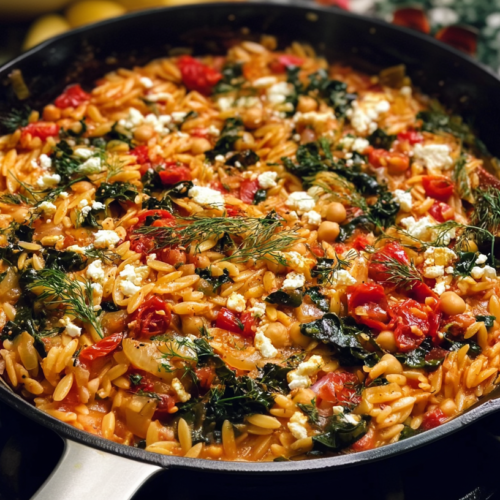
Baked Greek Orzo Skillet

Ingredients
- 2 tablespoons olive oil
- 1/2 onion diced
- 2 garlic cloves minced
- 1 red bell pepper diced
- 2 cups kale chopped
- 2 teaspoons dried oregano
- Pinch of red pepper flakes
- 1 teaspoon salt
- 3 tablespoons tomato paste
- 1 cup uncooked orzo pasta
- 1 can 14 ounces diced fire-roasted tomatoes
- 1 –2 cups cooked chicken or chickpeas for a vegetarian option
- 2 1/2 cups vegetable or chicken broth
- 1 –2 tablespoons butter optional, for richness
- 1/2 cup crumbled feta cheese optional
- 3 tablespoons fresh dill chopped (optional)
- Lemon wedges for serving (optional)
Instructions
- Preheat Oven: Set the oven to 200°C / 400°F.
- Sauté Vegetables: In a large oven-safe skillet, heat olive oil over medium heat. Add the diced onion and cook for 5 minutes until softened.
- Add Flavour: Stir in garlic, red pepper, kale, oregano, red pepper flakes, and salt. Cook for 5 minutes until the kale wilts.
- Build the Base: Mix in tomato paste and sauté for 1–2 minutes to release the flavours.
- Combine Ingredients: Add orzo, diced tomatoes, cooked chicken or chickpeas, and broth. Bring to a gentle simmer.
- Bake: Place the skillet in the oven and bake for 10–15 minutes, or until the orzo is tender.
- Finish: Stir in butter if using. Top with crumbled feta, fresh dill, a squeeze of lemon juice, and freshly ground black pepper. For softer feta, return the skillet to the oven for an extra 5 minutes.
Notes