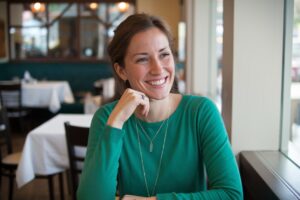
For most of my adult life, plastic surgery and I existed in quiet opposition. We occupied the same space without ever fully acknowledging each other. Even in my role working within beauty media—where cosmetic procedures are discussed openly, thoughtfully, and often critically—I kept my distance. I believed plastic surgery was artificial, a shortcut people used instead of doing the hard work of accepting themselves. I believed it upheld impossible beauty standards and quietly reinforced the idea that women’s bodies are problems to be fixed.
In my mind, choosing plastic surgery—unless medically necessary—felt anti-feminist. It felt like cheating. It felt like giving in.
That belief stayed firmly intact until the moment I found myself lying on an operating table, drifting into anesthesia, about to undergo a breast augmentation that would permanently change my body—and, unexpectedly, my relationship with myself.
I never thought I’d be the kind of person who would get a boob job. I built a career around interrogating beauty ideals and advocating for self-acceptance. But what I didn’t realize for years was that my opposition to plastic surgery wasn’t rooted solely in feminist principle. Much of it was rooted in insecurity, resentment, and a deeply ingrained belief that I didn’t deserve a body that felt easy to live in.
Where My Anti–Plastic Surgery Beliefs Came From
For a long time, I told myself I was against plastic surgery because I had “done the work” to accept my body. I thought that if I could learn to live with my perceived flaws, others should too. But that story was incomplete.
The truth is, I had grown accustomed to living in a body that felt like a burden. Chronic pain had shaped my adult life in ways I rarely acknowledged out loud. I’d undergone major spinal surgery. I’d spent years cycling through physical therapy, injections, imaging scans, and doctors’ appointments—many of which ended with shrugs and non-answers. I learned early on that pain is often minimized, especially when it’s invisible.
Over time, that experience taught me something dangerous: that struggling in my body was simply part of who I was. That ease was for other people.
So when I saw women choose plastic surgery and emerge visibly happier, more comfortable, more confident, I told myself they were taking a shortcut. What I didn’t want to admit was that I was jealous—not of how they looked, but of the agency they exercised over their bodies.
When My Breasts Became a Daily Problem
For most of my life, I didn’t think much about my breasts. Like nearly everyone with boobs, they were slightly asymmetrical, but nothing dramatic. I didn’t love that they weren’t perky, but I didn’t hate them either. They were relatively small, and I appreciated that.
That changed gradually in my late twenties. Weight fluctuations—driven by stress, mental health changes, and the emotional toll of the pandemic—altered my body in ways I didn’t immediately notice. One day, seemingly out of nowhere, I realized my mild asymmetry had become extreme. One breast was a full two cup sizes larger than the other.
The physical discomfort followed quickly. The larger breast sagged significantly, pulling painfully at my skin and making movement uncomfortable. My sports bras stopped working. Button-down shirts gaped awkwardly. I slouched instinctively to avoid drawing attention to my chest. Even intimacy became complicated, as bouncing caused pain and self-consciousness.
When my partner gently asked whether my larger breast seemed to still be growing, it forced me to confront how much the situation had escalated. A visit to my gynecologist confirmed there was nothing medically dangerous going on—but that didn’t erase the daily discomfort or emotional distress.
Realizing Plastic Surgery Wasn’t Just About Looks
I resisted the idea of plastic surgery for months. I told myself that discomfort wasn’t a good enough reason to abandon my beliefs. I framed my desire for change as vanity, even though the issue had long since surpassed aesthetics.
Eventually, I had to admit something uncomfortable: if I wanted guaranteed relief, plastic surgery was my only real option.
That realization forced me into a reckoning. Was I really committed to body acceptance—or was I committed to enduring unnecessary suffering to prove a point?
The Consultation That Changed Everything
Booking a consultation felt like crossing a moral line. I chose a board-certified plastic surgeon whose work I’d encountered professionally—someone known for a conservative, less-is-more approach and a strong respect for patient autonomy. I needed to feel safe from the male gaze, from beauty standards being projected onto my body.
Standing in a surgical gown, staring at myself in a mirror under fluorescent lights, I felt exposed in a way I hadn’t anticipated. Talking about my own body—rather than analyzing trends or procedures from a professional distance—was deeply uncomfortable.
But instead of judgment, I was met with validation. My surgeon immediately recognized how my breast asymmetry and sagging were affecting my daily life. She didn’t frame my concerns as cosmetic flaws. She framed them as quality-of-life issues.
That distinction mattered more than I expected.
Together, we discussed options. Implants were off the table. Fat transfer didn’t appeal to me. In the end, we landed on a plan that felt aligned with my goals: a breast reduction on the larger side and a lift on both breasts to restore balance and relieve discomfort.
I booked the surgery for January.
The Guilt Before Breast Augmentation
The months leading up to my breast augmentation were emotionally exhausting. I oscillated between excitement and shame, sometimes within the same hour. I found myself over-explaining my decision to my partner, my friends, even myself—listing practical benefits as if I needed permission.
At one point, my partner stopped me mid-sentence and said, “You don’t have to justify this. It would be okay if you did it just because you wanted to.”
That was when I realized the judgment wasn’t coming from anyone else. It was coming from me.
I had internalized the belief that wanting my body to feel better—look better—was something I needed to earn through suffering first.
The Mirror Moment That Changed Everything
One evening, months after my consultation, I stood naked in front of my bedroom mirror after a shower. I lifted my breasts with my hands, mimicking the position my surgeon had shown me during my consult.
And suddenly, the thoughts came rushing in.
My breasts are going to look normal.
I can’t imagine myself having a body that feels good.
I’m not the kind of person who gets to have that.
That was the moment I realized how deeply I’d tied my identity to bodily struggle. Somewhere along the way, I had convinced myself that pain, inconvenience, and discomfort were integral parts of who I was. Removing them felt almost dishonest.
Choosing Breast Augmentation as an Act of Autonomy
Living with chronic pain had trained me to expect disappointment from medical systems. My breast augmentation was the first time I entered a medical procedure with hope instead of dread.
For once, a doctor listened. For once, the solution wasn’t “learn to live with it.”
Going through with surgery didn’t erase my feminism. It expanded it. It forced me to confront the difference between rejecting beauty standards and denying myself care.
I wasn’t fixing my body to become more acceptable to others. I was fixing it so I could live more freely inside it.
Life After Breast Augmentation
As I write this, I’m still healing physically. There’s surgical tape, bruising, swelling. But emotionally, the relief was immediate.
Clothes fit again. Pain diminished. I stopped hiding. I stood taller without thinking about it. I stopped bracing myself every time I moved.
I can wear dresses I abandoned years ago. I can exercise without constant adjustment. I no longer pull away during intimacy out of fear or discomfort. I no longer feel like my body is working against me.
Perhaps most importantly, I feel visible again—without feeling exposed.
Rethinking My Views on Plastic Surgery
Do I suddenly think plastic surgery is harmless or universally empowering? No. The industry still contributes to unrealistic beauty standards. It can be overused, misused, and weaponized against people’s insecurities.
But I now understand that there is far more nuance than I once allowed.
People choose plastic surgery for countless reasons—some practical, some emotional, some deeply personal. Wanting your body to feel better, function better, or align more closely with how you see yourself isn’t a moral failure.
It’s a human desire.
What Breast Augmentation Ultimately Taught Me
My breast augmentation didn’t give me a new body. It gave me a body that finally feels like it belongs to me.
It taught me that self-acceptance doesn’t always mean staying the same. Sometimes, it means allowing yourself to change—without shame, without justification, and without punishment.
I still believe in body positivity. I still believe in questioning beauty standards. But I now believe just as strongly in autonomy, relief, and compassion.
And for the first time in a long time, I believe I deserve those things too.