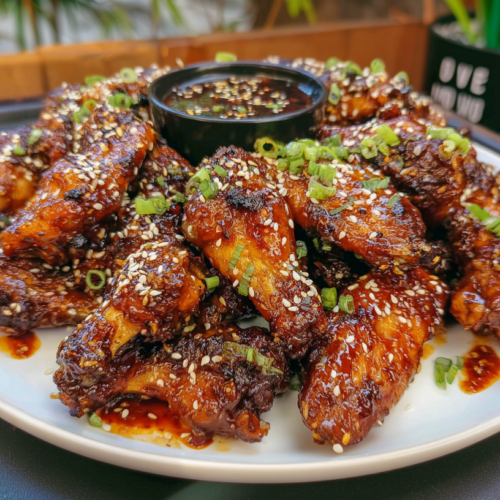
Honey Gochujang Chicken Wings are a Korean-inspired take on a classic crowd-pleaser, combining the smoky, crisp goodness of perfectly cooked chicken wings with a bold, sweet, and spicy glaze. The beauty of this recipe lies in the balance of textures and flavors: the tender meat from slow cooking, the crispy exterior achieved through a brief fry, and the sticky umami-packed honey-gochujang glaze that clings to each wing. Ideal for game days, weekend gatherings, or a flavorful weeknight dinner, these wings are both visually appealing and irresistibly flavorful. Every bite delivers a complex interplay of smoky notes, caramelized sweetness, garlic richness, and a subtle heat from the gochujang paste. With a simple set of pantry-friendly ingredients, this recipe transforms ordinary chicken wings into an elevated, restaurant-quality dish that will impress family and friends alike.
Why This Recipe Works
Honey Gochujang Chicken Wings work so well because they balance multiple cooking methods and flavor profiles to achieve a dish that is crispy, tender, smoky, sweet, and spicy all at once. Slow-smoking or baking the wings first ensures that the meat is juicy and cooked evenly, while the quick deep-fry step gives the exterior a delicate, golden-brown crunch. The glaze combines honey for sweetness, gochujang for heat and umami, soy sauce for depth, and a touch of rice vinegar for tang, resulting in a multi-dimensional flavor experience that clings to the wings perfectly. This method prevents the wings from becoming greasy or soggy while maximizing flavor absorption, making every bite rich, sticky, and satisfying.
Flavor Layering
The key to the wings’ irresistible taste lies in layered flavors:
-
Base Seasoning: A blend of salt, pepper, and garlic seasoning forms a simple but flavorful foundation, enhancing the natural taste of chicken without overwhelming it.
-
Smokiness: Slow cooking at low temperatures, either in a smoker or oven, infuses the wings with a subtle smokiness that adds depth and complexity.
-
Crunch: Brief frying creates a lightly crisp exterior, providing a satisfying contrast to the tender meat inside.
-
Glaze: The honey-gochujang glaze combines sweet, spicy, tangy, and umami elements, coating the wings in a sticky, flavorful layer.
-
Finishing Touches: Fresh scallions and toasted sesame seeds add aroma, crunch, and visual appeal, completing the flavor profile.
Technique
The recipe’s success depends on combining three cooking techniques in the right sequence:
-
Slow Cooking or Smoking: Slowly cooking the wings at low heat ensures they remain moist and tender while building flavor. The indirect heat allows the fat to render properly, preventing greasy or rubbery wings.
-
Deep Frying: A quick fry crisps the skin without overcooking the meat. It also provides a slightly caramelized texture that complements the sticky glaze.
-
Glazing: Tossing the wings in a warm, thickened glaze ensures that each piece is evenly coated. The heat from the wings helps the glaze stick without burning it, creating a glossy, restaurant-quality finish.
Cooking Logic
The reasoning behind this multi-step approach is both culinary and practical:
-
Step 1 – Seasoning and Slow Cooking: Coating the wings with seasoning and cooking them slowly builds the base flavor and renders excess fat, making the wings juicy and flavorful.
-
Step 2 – Quick Fry: The brief fry creates a crispy texture that the slow-cooked wings alone cannot achieve, adding mouthfeel and contrast.
-
Step 3 – Glaze Application: Applying the glaze last prevents it from burning and allows the heat of the wings to meld the sauce and meat together, creating a sticky, shiny coating that tastes layered and complex.
-
Step 4 – Garnish: Finishing with scallions and sesame seeds enhances presentation and introduces fresh, nutty notes, balancing the richness of the glaze.
This combination of low-and-slow cooking, quick crisping, and glaze finishing ensures that the wings are flavorful inside, crispy outside, and perfectly coated in sticky, spicy-sweet sauce. It’s a professional technique adapted for home cooks that guarantees a high-quality result every time.
Recipe Info
Prep Time: 30 minutes
Cook Time: 2 hours
Total Time: 2 hours 30 minutes
Yield: 4 servings
Category: Dinner, Lunch, Main Course, Appetizer
Cuisine: Korean
Ingredients & Key Ingredient Breakdown
Chicken Wings
Quantity: 2 lbs
Chicken wings are the star of this recipe. Their skin-to-meat ratio is ideal for both slow cooking and quick frying, allowing the fat to render and the skin to crisp beautifully. Wings also absorb marinades and glazes effectively, which enhances flavor penetration. Choosing fresh, high-quality wings ensures tenderness and rich flavor.
Salt, Pepper, Garlic Seasoning Mix
Quantity: 1 cup
This seasoning blend forms the foundational flavor layer. Salt enhances the natural taste of chicken while helping with moisture retention. Black pepper provides a subtle heat, and garlic seasoning adds aromatic depth. This simple mix ensures that the wings remain flavorful without relying solely on the glaze.
Canola Oil
Quantity: As needed for light coating before frying
Canola oil is a neutral-tasting oil with a high smoke point, ideal for frying. A light coating helps the wings develop a crisp exterior while preventing sticking.
Vegetable or Peanut Oil
Quantity: 1 quart, for frying
A high smoke-point oil is crucial for deep frying to achieve a golden, crispy exterior without burning. Peanut oil adds subtle nuttiness and withstands high heat, making it a professional choice for frying wings.
Korean Gochujang Paste
Quantity: ½ cup
Gochujang is a fermented Korean chili paste that provides the wings with complex heat and umami. It balances sweet, salty, and spicy flavors, forming the backbone of the glaze. Its sticky texture allows it to cling to the wings beautifully.
Honey
Quantity: ¼ cup
Honey introduces natural sweetness and viscosity to the glaze. It helps caramelize the wings slightly during coating and balances the spiciness of the gochujang, creating a harmonious sweet-heat profile.
Soy Sauce
Quantity: 2 tablespoons
Soy sauce adds depth, saltiness, and umami to the glaze. It enhances the overall flavor complexity and complements the sweetness of honey and heat from the gochujang.
Rice Vinegar
Quantity: 2 tablespoons
Rice vinegar provides a subtle acidity that cuts through the richness of the glaze and fried chicken. It balances sweetness and spice, brightening the flavor profile.
Brown Sugar
Quantity: 2 tablespoons
Brown sugar intensifies the caramel notes in the glaze while adding depth due to its molasses content. It contributes to the glossy finish and helps the glaze stick evenly.
Minced Garlic
Quantity: 2 tablespoons
Fresh garlic delivers pungent, aromatic intensity that elevates the glaze. When gently heated, it melds with the other ingredients, giving the wings a savory backbone.
Sesame Oil
Quantity: 1 teaspoon
Sesame oil adds nutty aroma and flavor to the glaze. Even in small quantities, it provides a distinctive Korean-style finishing note that complements the gochujang and honey perfectly.
Garnish – Sliced Spring Onions and Sesame Seeds
Fresh scallions add mild oniony freshness and visual contrast, while sesame seeds introduce a toasted, nutty crunch. Both garnishes enhance the wings’ flavor, texture, and presentation, making them look as good as they taste.
This ingredient breakdown ensures that every component has a purpose, from building foundational flavor layers to finishing with balanced, aromatic touches. Understanding each ingredient helps home cooks replicate restaurant-quality wings with confidence.
Step-by-Step Instructions
Step 1: Season the Wings
-
Pat 2 lbs of chicken wings dry with paper towels to remove excess moisture. This ensures crispiness during frying.
-
Optionally, coat the wings lightly with yellow mustard; this acts as a flavor primer and helps the seasonings adhere.
-
In a small bowl, combine 1 cup of salt, pepper, and garlic seasoning mix. Sprinkle generously over the wings, ensuring each piece is evenly coated.
Step 2: Low-and-Slow Cooking (Smoker or Oven)
-
Preheat your smoker or oven to 250°F (120°C) for indirect cooking.
-
If using a smoker, add wood chunks like hickory or applewood to enhance smokiness.
-
Arrange the wings on the cooking rack or tray so they aren’t touching. This allows even cooking and prevents sogginess.
-
Cook for 1.5–2 hours, until the internal temperature reaches 165°F (74°C). Slow cooking renders fat and produces tender meat beneath the skin.
Step 3: Prepare Deep-Frying Setup
-
While wings are finishing in the smoker or oven, heat 2–3 inches of vegetable or peanut oil in a heavy-bottomed pot to 325–350°F (160–175°C).
-
Use a thermometer to maintain consistent temperature; overheating oil can burn the wings while undercooking the inside.
Step 4: Fry the Wings
-
Carefully lower wings into the hot oil using tongs. Fry for approximately 2 minutes, turning occasionally.
-
Remove wings from the oil and place them on paper towels to drain excess oil. At this stage, wings are lightly crisp but not fully glazed.
Step 5: Make the Gochujang Glaze
-
In a small saucepan, combine ½ cup Korean gochujang paste, ¼ cup honey, 2 tablespoons soy sauce, 2 tablespoons rice vinegar, 2 tablespoons brown sugar, 2 tablespoons minced garlic, and 1 teaspoon sesame oil.
-
Heat gently over low-medium heat, stirring constantly until the glaze just starts to simmer. Avoid boiling aggressively to preserve flavor balance and prevent scorching.
Step 6: Toss Wings in Glaze
-
Place fried wings in a large mixing bowl or pan. Pour the warm glaze over the wings and toss until every piece is evenly coated. The glaze should cling to the wings, forming a shiny, sticky finish.
Step 7: Garnish and Serve
-
Plate wings immediately. Sprinkle sliced spring onions and sesame seeds evenly over the top.
-
Serve hot to maintain the crispy exterior and sticky, flavorful glaze.
Texture and Flavor Profile
Texture:
-
Exterior: Crispy from light deep frying and sticky glaze adhesion.
-
Interior: Moist and tender due to low-and-slow pre-cooking.
-
Garnish: Crunchy sesame seeds add textural contrast, while spring onions contribute a fresh bite.
Flavor Profile:
-
Sweet: Honey balances the spiciness of the gochujang and adds caramelized depth.
-
Spicy: Gochujang and optional jalapeño introduce complex heat.
-
Savory: Garlic, soy sauce, and seasoning mix create umami richness.
-
Smoky (optional): Smoking imparts subtle woodsy notes that elevate overall flavor.
-
Nutty: Sesame oil and seeds finish the wings with aromatic nuttiness.
Tips for Best Results
-
Dry Wings Thoroughly: Moisture inhibits crisping; always pat wings dry before seasoning.
-
Control Oil Temperature: Keep frying oil at 325–350°F. Too low causes greasy wings; too high burns the glaze.
-
Cook Low-and-Slow First: Pre-cooking wings ensures even internal doneness and tender meat.
-
Glaze at the End: Apply glaze after frying to preserve crispiness while ensuring sticky coating.
-
Avoid Overcrowding: Fry wings in batches if needed. Crowding lowers oil temperature and produces soggy wings.
-
Garnish Last-Minute: Add sesame seeds and spring onions right before serving to maintain texture and color.
Variations
-
Spicy Garlic Wings: Increase minced garlic in the glaze to 3 tablespoons and add ½ teaspoon crushed red pepper flakes for extra heat.
-
Crispy Oven-Baked Version: Skip frying and bake wings at 425°F (220°C) for 40–45 minutes, flipping halfway. Toss in glaze after baking.
-
Sweet and Tangy: Substitute rice vinegar with apple cider vinegar and reduce honey slightly for a tangy twist.
-
Extra Smoky Flavor: Use a charcoal grill or smoker with applewood or hickory to infuse deep smokiness.
-
Gochujang-Free Alternative: Replace Korean paste with a 2:1 ratio of Sriracha to miso paste for a similar spicy-salty profile.
Serving Suggestions
-
Serve as a main dish alongside steamed rice or garlic fried rice to balance spice and sweetness.
-
Pair with crisp vegetable sticks (carrots, cucumber, celery) and a cooling dip like ranch or yogurt sauce.
-
Ideal for game day appetizers, served on a large platter with toothpicks for easy grabbing.
-
Garnish with extra chopped scallions, toasted sesame seeds, or cilantro for visual appeal and freshness.
-
Complement with light, crisp beer or sparkling water to cut through richness and balance flavors.
Storage & Reheating
Storage:
-
Refrigerate leftover wings in an airtight container for up to 3 days.
-
Keep the glaze separate if possible to preserve crispiness; toss wings in glaze just before serving.
Freezing:
-
Freeze fully cooked, unglazed wings for up to 2 months. Wrap individually or place in freezer-safe bags with parchment between layers.
-
Thaw overnight in the refrigerator before reheating.
Reheating:
-
Oven method (recommended): Preheat oven to 375°F (190°C), place wings on a baking sheet, and reheat for 8–10 minutes until warmed through. Add glaze after reheating.
-
Air fryer: Reheat at 350°F (175°C) for 5–7 minutes for crispier results.
-
Avoid microwaving if possible; it softens the skin and reduces crunch.
Nutrition Overview (per serving, approx. 4 servings)
-
Calories: 627 kcal
-
Carbohydrates: 9 g
-
Protein: 6 g
-
Fat: 64 g
-
Saturated Fat: 10 g
-
Fiber: 0.1 g
-
Sugar: 6.5 g
-
Sodium: 7224 mg
Nutritional Notes:
-
High in protein and fat; ideal for low-carb or keto-friendly diets.
-
Sugar primarily from honey and brown sugar in glaze; optional adjustments can reduce sugar content.
-
Sodium is high due to soy sauce and seasoning—consider low-sodium alternatives for heart-conscious diets.
Frequently Asked Questions
1. Can I make these wings without frying?
Yes! You can bake at 425°F (220°C) for 40–45 minutes, flipping halfway. The glaze is added after baking.
2. How do I adjust the spice level?
Reduce gochujang, omit optional jalapeños, or balance with extra honey to control heat.
3. Can I prep wings ahead of time?
Absolutely. Pre-season and pre-cook in the smoker/oven. Fry and glaze just before serving for best texture.
4. What can I serve with these wings?
Steamed rice, vegetable sticks, slaws, or light beers pair perfectly.
5. Can I use frozen wings?
Yes, but thaw completely and pat dry before seasoning and cooking.
Honey Gochujang Chicken Wings are the ultimate combination of crispy, smoky, sweet, and spicy. This recipe elevates classic wings with Korean-inspired flavors, ensuring each bite is perfectly balanced. From slow-cooking to frying and glazing, every step emphasizes texture, flavor, and visual appeal, making these wings ideal for weeknight dinners, parties, or game-day gatherings. By following this detailed guide, even home cooks can achieve restaurant-quality wings with sticky, umami-rich glaze and tender, juicy interiors. Experiment with variations, pairings, and garnishes to suit your taste, and enjoy a dish that’s both bold in flavor and memorable.
Honey Gochujang Chicken Wings

Ingredients
- Chicken Wings:
- 2 lbs chicken wings
- 1 cup salt pepper, garlic seasoning mix
- Canola oil as needed
- 1 quart vegetable or peanut oil for frying
- Glaze:
- ½ cup Korean gochujang paste
- ¼ cup honey
- 2 tablespoons soy sauce
- 2 tablespoons rice vinegar
- 2 tablespoons brown sugar
- 2 tablespoons minced garlic
- 1 teaspoon sesame oil
- Garnish:
- Sliced spring onions scallions
- Sesame seeds
Instructions
- Coat the chicken wings lightly with yellow mustard (optional) and season thoroughly with the salt, pepper, and garlic mix. Set aside.
- Preheat a smoker or oven to 250°F (120°C) for indirect cooking. If using a smoker, add wood chunks such as hickory for extra smoky flavour.
- Place the wings in the smoker or oven and cook for 1.5–2 hours, until the internal temperature reaches 165°F (74°C).
- While the wings are finishing, prepare a deep-frying setup: heat 2–3 inches of oil in a large pot or deep pan to 325–350°F (160–175°C).
- Carefully fry the wings for about 2 minutes, turning occasionally, until lightly crisp. Remove and drain on paper towels.
- In a separate pan, gently heat the glaze ingredients until just simmering, then remove from heat.
- Toss the fried wings in the warm glaze until fully coated.
- Serve immediately, garnished with sliced scallions and sesame seeds.
Notes