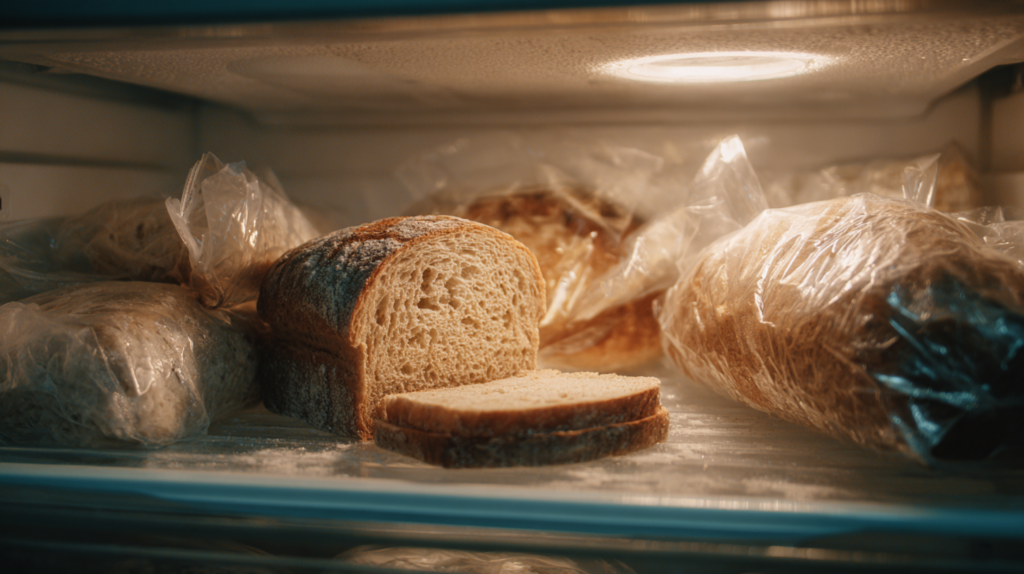
Freshly baked bread is one of life’s simplest pleasures. Whether it’s a crackly sourdough or a soft sandwich loaf, nothing beats slicing into a warm, fragrant loaf. Unfortunately, bread has a short life at room temperature—but the refrigerator can make it last longer. According to the U.S. Department of Agriculture, bread stored in the fridge typically lasts one to two weeks, compared to just two to four days on the counter.
So, should you refrigerate bread? The answer is a little complicated. Here’s what really happens when you chill your loaf.
Why Bread Lasts Longer in the Fridge
Mold loves warm, moist environments—and bread happens to check all the boxes. Most loaves contain up to 40% water and an abundance of carbohydrates, making them ideal for fast mold growth at room temperature.
Refrigeration slows mold development because:
-
Cold temperatures (40°F or below) inhibit spore growth
-
Low humidity inside the fridge reduces moisture on the surface
-
Mold varieties struggle to spread in colder environments
This is why the USDA considers refrigeration an effective tool for delaying mold for up to 14 days.
The Downside: Refrigeration Makes Bread Go Stale Faster
While refrigeration keeps mold away, it introduces a different problem: accelerated staling.
Sara Lee’s R&D senior director, Ernesto Martinez, confirms that chilled bread dries out quickly. This happens due to two scientific processes:
1. Retrogradation
The starch molecules in bread gradually crystallize as it cools, making the crumb firm and stale.
2. Recrystallization
At refrigerator temperatures, starch sets faster, turning your bread dry or hard even if it looks mold-free.
In other words, the fridge protects against mold—but sacrifices texture.
If you’ve ever bitten into a fridge-stored baguette, you know the tragedy.
Which Breads Last the Longest in the Fridge?
Some varieties tolerate refrigeration better than others:
-
Preservative-containing sandwich loaves – longest fridge life
-
Whole-grain bread – naturally lower moisture
-
Enriched breads (brioche, challah) – stay tender slightly longer
-
Artisanal loaves – least suitable for refrigeration
Organic, bakery-style breads typically stale more quickly, so the fridge is rarely ideal.
The Best Storage Method: Freeze It
If you want to extend shelf life without ruining the texture, freezing is the clear winner.
Why Freezing Works Better
-
Freezing halts mold growth
-
It prevents starch retrogradation
-
It keeps bread soft and fresh-tasting
-
It stores safely for up to 3 months (USDA)
How to Freeze Bread Properly
-
Keep it in its original packaging if unopened
-
Otherwise, wrap tightly in plastic wrap
-
Add a freezer-safe bag for extra protection
-
Freeze slices individually for easy use
To enjoy, thaw at room temperature or toast from frozen.
When to Throw Bread Away
No matter where you store your bread, safety comes first. Bread is one food you should never salvage once mold appears.
Signs It’s Time to Toss It
-
Green, blue, white, or black fuzz
-
Sour or unusual odors
-
Slimy or sticky texture
-
Excessively stale to the point of crumbling
If you spot mold anywhere on the loaf, throw the entire thing away—mold roots spread deeper than you can see.
The Bottom Line
Refrigerating bread can extend its life to 1–2 weeks, but it comes at the cost of freshness. While the fridge slows mold growth, it speeds staling. For long-term storage with the best texture, freezing is the superior method every time.
If you do choose to refrigerate bread, use it for:
-
Toast
-
Croutons
-
Bread pudding
-
Stuffing
Otherwise, enjoy bread fresh and freeze anything you won’t eat within a couple of days.