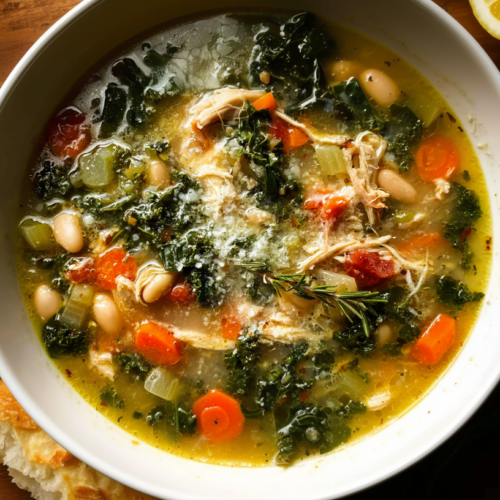
Lemon rosemary chicken soup is a modern take on classic comfort food, designed to feel both restorative and deeply satisfying without heaviness. Built on a foundation of gently sautéed vegetables, tender shredded chicken, and a savory broth infused with fresh herbs, this soup balances warmth with brightness in a way that feels intentional and nourishing. The addition of lemon juice at the end lifts the entire dish, cutting through richness and enhancing every layer of flavor, while rosemary adds a subtle piney aroma that grounds the soup and gives it character.
This recipe is particularly appealing for its versatility and everyday practicality. It works just as well for a quiet weeknight dinner as it does for meal prep, wellness resets, or serving to family when something comforting yet wholesome is needed. White beans contribute body and plant-based protein, kale adds color and texture, and olive oil ties everything together with a smooth, Mediterranean sensibility. Rather than relying on heavy cream or excessive seasoning, the soup leans on technique, timing, and fresh ingredients to achieve depth.
From a flavor perspective, this soup is clean, savory, and aromatic, with a gentle herbal backbone and a bright citrus finish. The chicken remains tender, the vegetables retain structure, and the broth tastes layered rather than flat. It is the kind of soup that feels light enough to enjoy year-round yet comforting enough to return to whenever warmth and nourishment are needed most.
Why This Recipe Works
This lemon rosemary chicken soup works because it is thoughtfully balanced across flavor, texture, and cooking method. Every component plays a specific role, and nothing is included without purpose. Rather than relying on heaviness or excess salt to create satisfaction, the recipe builds depth through gradual layering, controlled heat, and contrast between savory and bright elements.
The soup starts with a classic aromatic base of onion, carrot, and celery, which establishes sweetness and structure in the broth. Garlic and dried Italian seasoning add warmth and familiarity, while fresh rosemary introduces a clean, pine-like aroma that immediately signals comfort and freshness. The use of white beans adds body and subtle creaminess without the need for dairy, making the soup filling yet light. Kale contributes texture and earthiness, while shredded chicken provides protein and makes the soup substantial enough to serve as a complete meal.
What truly elevates the recipe is the finishing step. Fresh lemon juice added at the very end sharpens the flavors and prevents the soup from tasting flat or overly savory. This final adjustment transforms the broth, making it taste brighter, cleaner, and more complex. The result is a soup that feels intentional, nourishing, and well-rounded, suitable for both everyday meals and special moments of care.
Flavor Layering
Flavor layering is central to the success of this soup. Instead of adding all ingredients at once, flavors are developed in stages, allowing each layer to build upon the previous one.
The first layer comes from sautéing the vegetables in olive oil. This step draws out their natural sugars, creating a soft sweetness that forms the backbone of the soup. Cooking the onion, carrot, and celery slowly ensures they release flavor into the oil rather than remaining raw or watery. This foundation gives the broth depth before any liquid is added.
The second layer is aromatic. Garlic, Italian seasoning, and fresh rosemary are added once the vegetables are softened. Cooking them briefly in the hot oil allows their essential oils to bloom without burning, infusing the base with herbal warmth and subtle complexity. Rosemary, in particular, benefits from this step, as heat releases its resinous, woodsy notes.
The third layer introduces substance. White beans add mild creaminess and structure, kale brings slight bitterness and chew, and shredded chicken provides savory richness. As these ingredients simmer together, they exchange flavors with the broth, resulting in a cohesive and balanced soup.
The final layer is acidity. Lemon juice added off heat preserves its brightness and ensures it enhances rather than overwhelms the dish. This contrast between rich broth and fresh citrus is what makes the soup feel vibrant and complete.
Technique
The techniques used in this recipe are simple but precise, ensuring consistent results without unnecessary complexity.
Sautéing the vegetables over medium-high heat allows moisture to evaporate while encouraging caramelization. Stirring frequently prevents browning that could introduce bitterness, especially important for a soup meant to taste clean and fresh. Garlic is added only briefly to avoid scorching, which would disrupt the delicate balance of flavors.
Simmering, rather than boiling, is essential once the broth is added. Gentle heat keeps the chicken tender, preserves the integrity of the vegetables, and allows flavors to meld gradually. Overheating would cause the kale to lose color and the chicken to become stringy.
Finishing the soup with lemon juice after removing the herb stems is a deliberate technique. This timing keeps the citrus flavor bright and aromatic, rather than muted by prolonged heat. Adjusting salt and pepper at the end ensures seasoning is precise and responsive to the final flavor profile.
Cooking Logic
The cooking logic behind this lemon rosemary chicken soup prioritizes balance, efficiency, and adaptability. The recipe is designed to move from flavor development to assembly to refinement, making it approachable while still producing a polished result.
Vegetables are cooked first to establish depth before liquid is introduced. Protein is added already cooked, preventing overcooking and allowing the soup to come together quickly. Greens are added late so they retain texture and color. Acid is added last to preserve freshness and control brightness.
Each step builds logically on the previous one, reducing the risk of overcooking or under-seasoning. The result is a soup that tastes layered and intentional, despite being made with straightforward techniques and accessible ingredients.
Recipe Info
Prep Time: 10 minutes
Cook Time: 30 minutes
Total Time: 40 minutes
Yield: 6 servings
Category: Soup
Cuisine: Mediterranean-inspired / American
Ingredients
Soup Base
¼ cup olive oil, divided
½ medium onion, finely diced
3 carrots, finely diced
3 celery stalks, finely diced
3 garlic cloves, minced
½ teaspoon Italian seasoning
2 fresh rosemary sprigs or fresh thyme sprigs
1 teaspoon coarse salt
5 cups chicken broth
Add-Ins
1 (15-ounce) can white beans, rinsed and drained
3 cups chopped kale
2–3 cups cooked, shredded chicken or turkey
To Finish
Juice of 2 fresh lemons
Salt and freshly ground black pepper, to taste
Grated Parmesan cheese (optional, for serving)
Ingredient Breakdown
Olive Oil
Olive oil serves as both a cooking medium and a flavor contributor in this soup. Using olive oil instead of butter keeps the soup lighter while adding subtle fruitiness that complements the herbs and lemon. Dividing the oil allows for controlled fat distribution, ensuring vegetables sauté evenly without becoming greasy. Extra virgin olive oil is preferred for its flavor and antioxidant properties, though regular olive oil works well for sautéing at higher heat.
Onion
Onion provides the foundational sweetness and savory depth essential to a balanced soup. Finely dicing the onion ensures it softens quickly and melts into the broth rather than standing out as a distinct texture. As it cooks, the onion releases natural sugars that round out the acidity of the lemon added later, preventing the soup from tasting sharp or thin.
Carrots
Carrots add gentle sweetness, color, and body. Their natural sugars enhance the broth and balance the herbal notes of rosemary. Finely diced carrots cook evenly and distribute flavor throughout the soup, contributing to a cohesive texture rather than chunky bites. They also boost the soup’s nutritional value with beta-carotene and fiber.
Celery
Celery brings subtle bitterness and aromatic freshness that prevents the soup from becoming overly sweet. It supports the other vegetables without overpowering them and adds depth to the broth. Finely diced celery ensures even cooking and avoids fibrous texture, allowing it to integrate smoothly with the other aromatics.
Garlic
Garlic introduces warmth and savory complexity. Minced garlic distributes evenly and releases flavor quickly when cooked briefly in oil. Cooking garlic for only about one minute prevents bitterness and preserves its aromatic qualities, which are essential for a clean, comforting soup profile.
Italian Seasoning
Italian seasoning adds a subtle blend of dried herbs that enhance the soup without dominating it. It supports the fresh rosemary or thyme rather than competing with them. Using a small amount ensures the soup remains bright and herb-forward rather than heavy or muddled.
Fresh Rosemary or Thyme
Fresh rosemary provides a piney, earthy aroma that pairs beautifully with lemon and chicken. Thyme offers a milder, slightly floral alternative. Using whole sprigs allows for easy removal and prevents overpowering the soup. These herbs infuse the broth gently during simmering, creating depth without bitterness.
Coarse Salt
Salt is essential for drawing out flavor at every stage of cooking. Adding salt early helps the vegetables release moisture and intensifies their natural flavors. Final seasoning at the end ensures balance after lemon juice is added. Coarse salt dissolves gradually, offering better control over seasoning.
Chicken Broth
Chicken broth forms the backbone of the soup. A good-quality broth provides richness and depth without excessive sodium. Using broth instead of water ensures the soup tastes full-bodied and satisfying, even with a light ingredient list. Low-sodium broth allows better control over final seasoning.
White Beans
White beans add creaminess and substance without dairy. Their mild flavor absorbs the surrounding broth while contributing protein and fiber. Rinsing and draining the beans removes excess sodium and improves the overall cleanliness of the flavor.
Kale
Kale adds texture, color, and nutritional density. Its slightly bitter edge balances the richness of the broth and beans. Chopping kale into manageable pieces ensures it cooks evenly and remains tender without becoming mushy. Kale holds its structure well, making it ideal for soups that may be reheated.
Cooked Shredded Chicken or Turkey
Shredded chicken or turkey provides lean protein and transforms the soup into a complete meal. Using pre-cooked meat keeps cooking time short and prevents dryness. The shredded texture allows the meat to absorb the broth, enhancing overall flavor integration.
Lemon Juice
Fresh lemon juice is the defining finishing touch. Added at the end, it brightens the entire dish and lifts the savory components. Lemon balances the herbs and olive oil, preventing the soup from feeling heavy. Fresh juice is essential for achieving the clean, vibrant flavor that defines this recipe.
Black Pepper
Freshly ground black pepper adds mild heat and aromatic sharpness. It enhances the lemon and herbs without overpowering the soup. Adding pepper at the end preserves its fragrance and prevents bitterness.
Parmesan Cheese (Optional)
Grated Parmesan adds umami and a touch of richness for those who prefer a slightly heartier finish. It melts into the hot soup, enhancing savoriness without masking the bright lemon flavor. Serving it optional allows the soup to remain flexible for different dietary needs.
Step-by-Step Instructions (Detailed Method)
Step 1: Prepare the Cooking Base
Before turning on the stove, ensure all ingredients are prepped and measured. Finely dice the onion, carrots, and celery, mince the garlic, chop the kale, rinse and drain the beans, and shred the cooked chicken or turkey. Having everything ready allows the cooking process to move smoothly and prevents overcooking any components.
Place a large, heavy-bottomed soup pot or Dutch oven over medium-high heat. Add 1 tablespoon of olive oil and allow it to warm until it shimmers slightly but does not smoke. This indicates the oil is hot enough to sauté without burning.
Step 2: Sauté the Vegetables
Add the diced onion, carrots, and celery to the hot oil. Stir immediately to coat the vegetables evenly. Cook for 5 to 8 minutes, stirring often, until the vegetables soften and become fragrant.
The onion should turn translucent without browning, while the carrots and celery should begin to soften but still retain their shape. This step builds the foundational flavor of the soup, so avoid rushing it. Gentle sautéing allows the natural sugars in the vegetables to release, creating a balanced and aromatic base.
Step 3: Add Aromatics and Herbs
Reduce the heat slightly to medium. Add the minced garlic, Italian seasoning, rosemary or thyme sprigs, and coarse salt to the pot. Stir constantly for about 1 minute.
The garlic should become fragrant but not browned. Browning garlic can introduce bitterness, which would clash with the bright lemon finish later. The herbs will begin releasing their essential oils, infusing the oil and vegetables with warmth and depth.
Step 4: Build the Soup
Pour in the chicken broth, followed by the white beans, chopped kale, and shredded chicken or turkey. Add the remaining olive oil if using.
Increase the heat and bring the soup to a gentle simmer. Once bubbling lightly, reduce the heat to maintain a steady simmer. Cook for 10 to 20 minutes, stirring occasionally.
During this time, the kale will soften, the beans will absorb the broth, and the chicken will warm through. The soup should smell herbaceous and comforting, with visible flecks of greens and tender vegetables throughout.
Step 5: Adjust Texture and Flavor
After simmering, check the texture of the kale and vegetables. They should be tender but not mushy. If the soup feels too thick, add a small amount of additional broth or water. If it feels too thin, allow it to simmer uncovered for a few extra minutes.
Remove the rosemary or thyme sprigs and discard them. This prevents the soup from becoming overly herbal or woody in flavor.
Step 6: Finish with Lemon
Remove the pot from the heat. Stir in the fresh lemon juice slowly, tasting as you go. Lemon should brighten the soup, not overpower it. Adjust seasoning with additional salt and freshly ground black pepper to taste.
Adding lemon at the end preserves its freshness and ensures the soup remains vibrant and balanced.
Step 7: Serve
Ladle the soup into warm bowls. Top with freshly grated Parmesan cheese if desired. Serve immediately while hot, allowing the aromas of lemon and herbs to shine.
This soup pairs beautifully with crusty bread, toasted sourdough, or a simple side salad.
Visual and Texture Cues for Success
-
Vegetables should be soft but still defined
-
Broth should be clear and lightly golden
-
Kale should be tender, not limp or gray
-
Lemon aroma should be noticeable but not sharp
Common Mistakes to Avoid
-
Overcooking garlic, which causes bitterness
-
Adding lemon too early, dulling its flavor
-
Over-salting before tasting at the end
-
Boiling aggressively instead of simmering
Variations and Customizations
This Lemon Rosemary Chicken Soup is intentionally designed as a flexible, adaptable recipe that can be adjusted based on dietary needs, ingredient availability, and seasonal preferences. The core structure remains the same—aromatic vegetables, protein, herbs, and bright citrus—but small changes can transform the soup while preserving its balance and integrity.
Protein Variations
This soup works exceptionally well with a variety of proteins beyond traditional chicken.
Turkey is a natural substitute and works particularly well if using leftover roasted or holiday turkey. Its slightly richer flavor pairs beautifully with lemon and rosemary without overpowering the broth.
For a vegetarian version, omit the meat entirely and double the white beans. Cannellini beans, navy beans, or butter beans all provide excellent creaminess and protein. Chickpeas can also be used for a firmer texture.
For a pescatarian option, add cooked white fish such as cod or halibut during the final five minutes of cooking. The delicate fish absorbs the lemon-herb broth without breaking apart.
Herb Substitutions
Rosemary provides a woodsy, pine-like aroma that anchors the soup, but it can be replaced or combined with other herbs depending on preference.
Fresh thyme offers a softer, earthier profile and is ideal for those who find rosemary too assertive. Sage adds depth and warmth, especially in colder months. Bay leaf can also be added during simmering for subtle background complexity, removed before serving.
Avoid dried rosemary in this recipe, as it can become overpowering and fibrous in soups.
Greens and Vegetable Options
Kale provides structure and nutrition, holding its shape well during simmering. However, it can be swapped with other greens.
Swiss chard adds a mild bitterness and silky texture. Spinach works for a softer finish but should be added at the very end to prevent wilting excessively. Escarole or baby bok choy can be used for a more Mediterranean or Asian-inspired variation.
Additional vegetables such as zucchini, fennel, or leeks can be incorporated to enhance complexity without altering the core flavor.
Bean and Grain Additions
White beans add creaminess and protein, but lentils or chickpeas can be substituted if preferred. Red lentils will break down slightly, thickening the broth naturally, while green lentils retain structure.
For a heartier soup, cooked grains such as farro, barley, or brown rice can be stirred in near the end of cooking. Keep portions moderate to maintain the soup’s light, lemon-forward character.
Dairy and Garnish Adjustments
Parmesan is optional and should be used sparingly to enhance umami without dominating. For dairy-free versions, nutritional yeast provides a similar savory note.
A drizzle of extra virgin olive oil at the end adds richness and aroma, while crushed red pepper flakes offer gentle heat without overpowering the lemon.
Serving Suggestions
Lemon Rosemary Chicken Soup is versatile enough to serve as both a light starter and a satisfying main course.
Serve it with crusty artisan bread, toasted sourdough, or garlic bread for soaking up the broth. A simple green salad dressed with olive oil and lemon complements the soup’s brightness without competing flavors.
For a more substantial meal, pair the soup with a grilled cheese sandwich, roasted vegetables, or a grain-based side such as quinoa or couscous.
This soup also works exceptionally well as part of a meal-prep rotation, retaining flavor and texture over several days.
Storage and Reheating
Proper storage preserves both texture and freshness, making this soup ideal for leftovers.
Allow the soup to cool completely before transferring it to airtight containers. Refrigerate for up to 4 days.
For longer storage, freeze the soup in individual portions for up to 3 months. Leave out the lemon juice if freezing, and add it fresh during reheating for best flavor.
To reheat, warm gently on the stovetop over medium-low heat, stirring occasionally. Avoid boiling, as this can dull the lemon flavor and overcook the greens. Add a splash of broth or water if needed to loosen the texture.
Texture and Flavor Profile
This Lemon Rosemary Chicken Soup strikes a balance between bright acidity, savory depth, and comforting body. The broth is light yet flavorful, enriched by the natural gelatin of slow-cooked chicken and softened vegetables.
-
Broth: Silky and lightly aromatic, with fresh lemon juice providing a subtle tang that complements the savory undertones.
-
Chicken: Tender and juicy, with a mild flavor that absorbs the herbs and aromatics, creating a meaty foundation without heaviness.
-
Vegetables: Carrots and celery offer slight sweetness and crunch, softened just enough to contrast the hearty white beans and kale.
-
Greens: Kale adds a pleasant chew and vibrant green color, retaining structure even after simmering.
-
Herbs: Rosemary or thyme provides a woodsy, fragrant note, enhancing the earthy undertones without overpowering the lemon brightness.
-
Finish: Lemon juice brightens the soup and balances the richness of olive oil or optional Parmesan, resulting in a refreshing yet comforting flavor profile.
The combination of textures — tender chicken, creamy beans, firm greens, and soft vegetables — creates a harmonious mouthfeel that makes each spoonful satisfying.
Tips for Best Results
-
Use fresh herbs whenever possible: Fresh rosemary or thyme provides vibrant aroma and avoids the fibrous texture that dried rosemary can contribute.
-
Don’t overcook the greens: Add kale toward the end of cooking to maintain color, texture, and nutritional value.
-
Balance acidity: Adjust lemon juice gradually; too much can overpower the soup, while too little can make it taste flat.
-
Shred chicken evenly: For consistent flavor in every bite, shred or chop the chicken uniformly before adding it to the soup.
-
Simmer gently: Keep the soup at a low simmer to allow flavors to meld without turning vegetables mushy.
-
Season incrementally: Taste frequently and adjust salt and pepper gradually for optimal balance.
-
Optional aromatics: Garlic and onion can be sweated slowly to deepen the base flavor without introducing bitterness.
Variations
-
Vegetarian version: Omit the chicken and use vegetable broth. Add extra white beans, lentils, or firm tofu for protein.
-
Spicy twist: Add a pinch of red pepper flakes during the aromatics stage for gentle heat.
-
Grain-enhanced: Stir in cooked farro, barley, or quinoa to make it heartier.
-
Mediterranean style: Include olives, roasted red peppers, and a sprinkle of feta when serving.
-
Creamy version: Add a small amount of coconut milk or plain yogurt at the end for added richness.
Serving Suggestions
-
Serve with crusty bread, sourdough, or a garlic baguette.
-
Pair with a light salad such as arugula or mixed greens.
-
Top with freshly grated Parmesan or a drizzle of extra virgin olive oil for added depth.
-
Ideal for meal prep: store in individual containers for easy lunches or dinners.
Storage and Reheating
-
Refrigeration: Store in airtight containers for up to 4 days.
-
Freezing: Omit lemon juice before freezing. Store in portions for up to 3 months; add lemon when reheating.
-
Reheating: Warm gently on the stovetop over medium-low heat, stirring occasionally. Avoid boiling. Add a splash of broth if needed.
Nutrition Overview (Per Serving)
-
Calories: 320 kcal
-
Protein: 24 g
-
Carbohydrates: 22 g
-
Fat: 14 g
-
Saturated Fat: 2 g
-
Fiber: 5 g
-
Sugar: 4 g
-
Sodium: 620 mg
-
Cholesterol: 65 mg
This soup is nutrient-dense, rich in protein, fiber, and antioxidants from vegetables and herbs, and features a moderate amount of healthy fats.
Frequently Asked Questions
Q: Can I make this soup in advance?
A: Yes, it can be made 1-2 days ahead. Keep lemon juice separate until serving.
Q: Can I use frozen chicken?
A: Yes, thaw completely and shred before adding to ensure even cooking.
Q: Can I substitute other greens for kale?
A: Absolutely. Spinach, Swiss chard, or escarole work well. Add softer greens at the end to prevent overcooking.
Q: Can this soup be made in a slow cooker?
A: Yes, combine all ingredients except lemon juice, cook on low for 4-6 hours, then stir in lemon juice before serving.
This Lemon Rosemary Chicken Soup is a perfect combination of comfort and freshness. Its aromatic herbs, bright lemon, tender protein, and nutrient-rich vegetables create a nourishing bowl suitable for weeknight dinners, meal prep, or cozy cold-weather meals. The recipe’s flexibility allows it to accommodate vegetarian, spicy, or Mediterranean variations, ensuring it’s a versatile addition to any kitchen.
Lemon Rosemary Chicken Soup

Ingredients
- ¼ cup olive oil divided
- ½ medium onion finely diced
- 3 carrots finely diced
- 3 celery stalks finely diced
- 3 garlic cloves minced
- ½ teaspoon Italian seasoning
- 2 fresh rosemary sprigs or fresh thyme sprigs
- 1 teaspoon coarse salt
- 1 15-ounce can white beans, rinsed and drained
- 3 cups chopped kale
- 2 –3 cups cooked shredded chicken or turkey
- 5 cups chicken broth
- To Finish
- Juice of 2 fresh lemons
- Salt and freshly ground black pepper to taste
- Grated Parmesan cheese optional, for serving
Instructions
- Sauté the Vegetables:
- Heat 1 tablespoon of olive oil in a large soup pot over medium-high heat. Add onion, carrots, and celery. Cook for 5–8 minutes, stirring often, until soft and fragrant.
- Add Aromatics:
- Stir in garlic, Italian seasoning, rosemary or thyme sprigs, and salt. Cook for about 1 minute, stirring constantly to prevent the garlic from browning.
- Simmer the Soup:
- Add the beans, kale, shredded chicken, broth, and remaining olive oil if using. Bring to a gentle simmer and cook for 10–20 minutes, until the kale is tender and flavors are well blended.
- Finish and Serve:
- Remove herb stems. Stir in fresh lemon juice and season with additional salt and black pepper to taste. Serve warm with grated Parmesan if desired.
Notes