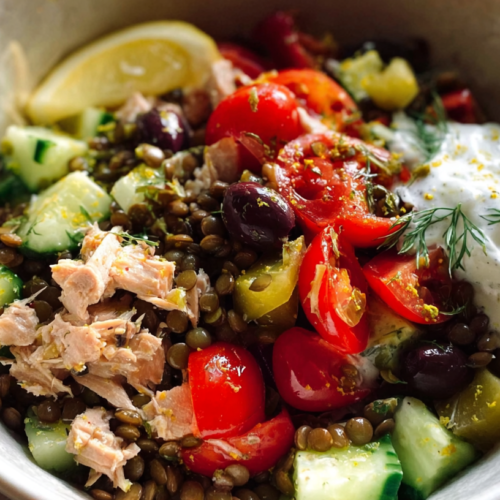
This Lentil Greek Salad with Dill Sauce brings together the best of Mediterranean flavors and plant-based nutrition in one vibrant, protein-packed dish. Tender, earthy lentils provide the perfect foundation for crisp cucumbers, juicy cherry tomatoes, and optional protein additions like tuna or olives, creating a hearty salad that satisfies both taste and nutrition. The creamy dill yogurt dressing elevates the dish, adding brightness, tang, and herbaceous notes that harmonize beautifully with the vegetables. Whether served for a light lunch, a nutritious dinner, or prepped ahead for the week, this salad is refreshingly versatile, balancing wholesome ingredients, bold flavors, and a variety of textures—from the soft lentils to the crisp cucumber and juicy tomatoes. Its Mediterranean inspiration makes it feel light yet substantial, offering the perfect combination of fiber, protein, and healthy fats. This salad is a colorful, satisfying option for anyone looking for an easy, flavorful, and nutrient-dense meal.
Why This Recipe Works
The success of this Lentil Greek Salad lies in the balance of flavor, texture, and nutrition. Lentils provide a hearty, slightly nutty base that complements the crisp freshness of cucumbers and the sweetness of cherry tomatoes. When paired with a creamy dill yogurt dressing, the salad gains a luxurious mouthfeel without heavy calories, making it light yet satisfying. The addition of optional ingredients like tuna or olives enhances protein content and introduces subtle umami notes, creating a well-rounded flavor profile.
What sets this recipe apart is its simplicity and versatility. The salad is easy to prepare in one bowl, yet it feels elevated due to the use of fresh herbs and a creamy dressing. The flavors are layered naturally: the mild earthiness of the lentils, the juicy brightness of tomatoes, the cool crunch of cucumbers, and the herbaceous tang from the dill combine in perfect harmony. Each bite delivers contrast, keeping the palate interested, while the dressing binds the ingredients together for a cohesive, satisfying experience.
This salad works as a meal-prep friendly dish because the lentils hold their texture even after chilling, and the dressing can be stored separately until ready to serve. By cooking the lentils just right and using fresh vegetables, the salad maintains freshness, color, and a lively flavor that will entice anyone—even those who don’t usually eat legumes.
Flavor Layering
The flavors in this salad are thoughtfully layered. The base layer of lentils contributes a subtle nuttiness and hearty texture. Juicy cherry tomatoes add a touch of natural sweetness, while crisp cucumber offers a refreshing crunch. If using tuna or olives, these ingredients provide a mild saltiness and umami depth that complement the other elements.
The dill yogurt dressing introduces a bright, tangy, and herbaceous layer, bringing acidity and creaminess that ties the salad together. Lemon juice or vinegar in the dressing cuts through the richness of the yogurt, enhancing the overall vibrancy of the dish. Each ingredient plays a specific role, creating a balanced bite that is fresh, satisfying, and full of Mediterranean-inspired complexity.
Technique
The key to this salad’s success is in properly cooking and handling the lentils. Overcooked lentils will become mushy and blend into the dressing, while undercooked lentils will feel tough and detract from the overall texture. Aim for tender but firm lentils that can hold their shape, providing body and substance to the salad.
The dressing should be whisked thoroughly to emulsify the yogurt, olive oil, and lemon juice, ensuring it coats every ingredient evenly. Toss the salad gently to maintain texture; over-mixing can bruise the vegetables and make the salad watery.
Recipe Info
Prep Time: 15 minutes
Cook Time: 15 minutes
Total Time: 30 minutes
Yield: 4–6 servings
Category: Salad
Cuisine: Mediterranean / Greek-Inspired
Ingredients (Professional Breakdown)
For the Salad
-
1 cup uncooked lentils – Lentils are the base of this salad, providing protein, fiber, and a hearty, nutty flavor. Choose brown or green lentils for structure; red lentils are softer and may become mushy.
-
1 pint cherry tomatoes, halved – Sweet, juicy, and slightly acidic, cherry tomatoes brighten the salad and create contrast with the earthy lentils.
-
1 medium cucumber, diced – Crisp and refreshing, cucumber adds crunch and a cooling effect that balances the tangy dressing.
-
2 cans tuna, drained and flaked (optional) – Tuna introduces savory, umami-rich protein. Can be omitted for a vegetarian version.
-
1/4 cup pepperoncini or kalamata olives, sliced (optional) – Adds a salty, briny punch that complements the fresh vegetables.
For the Dill Yogurt Dressing
-
1 cup plain Greek yogurt – Creamy, tangy, and high in protein, Greek yogurt forms the base of the dressing.
-
1 tablespoon extra virgin olive oil – Adds richness and smoothness, balancing the acidity of lemon or vinegar.
-
1 tablespoon lemon juice or vinegar – Provides brightness and lifts the flavors of the salad, keeping it fresh and vibrant.
-
1/2 teaspoon garlic powder – Adds subtle depth without overpowering the freshness of the herbs.
-
1 teaspoon salt – Enhances all flavors and balances the tanginess of the dressing.
-
1–2 teaspoons fresh or freeze-dried dill – Herbaceous and aromatic, dill is the star flavor, tying the salad and dressing together.
Pro Tip: Each ingredient plays a specific role in flavor, texture, or nutrition. The lentils give substance, the vegetables offer crunch and freshness, and the dressing adds creaminess and brightness, creating a fully balanced salad.
Step-by-Step Instructions
1. Cook the Lentils
-
Rinse the lentils thoroughly under cold water to remove any dust or impurities.
-
Add the lentils to a medium saucepan and cover with water (about 2 inches above the lentils).
-
Bring to a gentle boil, then reduce to a simmer. Cook for 12–15 minutes, or until tender but still holding shape. Avoid overcooking to prevent mushiness.
-
Drain and rinse under cold water to stop cooking. Let the lentils cool completely.
Editorial Tip: Cooking lentils al dente ensures they maintain a firm texture, providing contrast with the creamy dressing and crisp vegetables.
2. Prepare the Vegetables
-
Halve the cherry tomatoes for bite-sized sweetness and visual appeal.
-
Dice the cucumber, removing excess seeds if desired to prevent added moisture.
-
If using olives or pepperoncini, slice thinly to evenly distribute flavor throughout the salad.
-
Optional: Flake tuna into small pieces, ensuring it will mix evenly with the lentils and vegetables.
Editorial Tip: Uniform vegetable cuts enhance presentation and ensure every bite contains a balance of textures.
3. Make the Dill Yogurt Dressing
-
In a small bowl, combine Greek yogurt, olive oil, and lemon juice (or vinegar).
-
Add garlic powder, salt, and dill, whisking until smooth and creamy.
-
Taste and adjust seasoning—more lemon juice for brightness, more dill for herbaceous punch, or a pinch of salt to enhance flavor.
Editorial Tip: Whisking the dressing thoroughly ensures the olive oil emulsifies with the yogurt, creating a silky consistency that clings to the lentils and vegetables.
4. Assemble the Salad
-
In a large bowl, combine the cooled lentils, cherry tomatoes, cucumber, tuna (if using), and olives or pepperoncini.
-
Pour in the dill yogurt dressing, starting with half. Gently toss with a large spoon or salad tongs to coat everything evenly.
-
Taste and add more dressing if necessary. The salad should be creamy but not overly saucy.
Editorial Tip: Toss gently to avoid bruising vegetables or breaking up the lentils. Gentle folding preserves structure and keeps the salad visually appealing.
5. Garnish and Serve
-
Sprinkle extra fresh dill or a few crumbles of feta for added flavor and color contrast.
-
Serve immediately, or chill for 30–60 minutes to allow flavors to meld.
Editorial Tip: Chilling the salad slightly enhances flavor integration while keeping lentils firm and vegetables crisp.
Texture and Flavor Profile
The texture of this salad is thoughtfully layered: tender, slightly chewy lentils form the base, complemented by the crispness of cucumber and the juicy burst of cherry tomatoes. Optional tuna or olives add a denser, umami-rich bite that balances the lightness of the vegetables.
Flavor-wise, the salad is vibrant and Mediterranean-inspired. The creamy dill yogurt dressing introduces tanginess and herbaceous notes, while the lemon juice brightens the palate. Salt and garlic powder subtly enhance the natural flavors of the vegetables and lentils, creating a balanced, multi-dimensional dish. Each bite offers a harmonious contrast of soft, crisp, and creamy textures paired with nutty, tangy, and slightly savory flavors.
Tips for Best Results
-
Cooking lentils: Ensure lentils are cooked al dente to maintain texture; overcooking leads to a mushy base.
-
Dressing: Whisk the dressing thoroughly to emulsify the yogurt and oil, producing a smooth, creamy texture.
-
Vegetable prep: Cut vegetables uniformly for even flavor distribution and appealing presentation.
-
Flavor adjustments: Taste and adjust seasoning before serving—extra lemon juice or dill can brighten the salad.
-
Meal prep: Store lentils and dressing separately if preparing ahead; assemble just before serving for maximum freshness.
Variations
This salad is highly versatile, allowing you to adapt it to your preferences, dietary needs, or seasonal ingredients.
-
Protein Swaps: Replace tuna with grilled chicken, chickpeas, or feta cheese for a vegetarian option. Smoked salmon also works beautifully for a Mediterranean twist.
-
Lentil Varieties: While brown or green lentils are ideal for texture, red or yellow lentils can be used for a softer, creamier salad. Adjust cooking time accordingly.
-
Vegetable Mix-Ins: Incorporate bell peppers, shredded carrots, radishes, or thinly sliced red onion to add color, crunch, and flavor diversity.
-
Herb Tweaks: Swap dill with fresh parsley, cilantro, or mint for a different flavor profile while keeping it fresh and herbaceous.
-
Dressing Adjustments: For a lighter dressing, reduce Greek yogurt slightly and add a splash of extra virgin olive oil or lemon juice. For a creamier texture, add a teaspoon of tahini or a small amount of avocado.
Editorial Insight: The beauty of this salad lies in its balance between heartiness and freshness, allowing you to swap ingredients without losing the essence of the dish.
Serving Suggestions
This lentil Greek salad works wonderfully in multiple contexts:
-
As a Light Lunch: Serve alone with a slice of whole-grain bread or a few crackers for a filling, nutrient-packed meal.
-
As a Side Dish: Pair it with grilled meats, roasted vegetables, or Mediterranean mains like chicken skewers, lamb chops, or falafel.
-
Meal Prep Friendly: Portion into individual containers for a week of ready-to-eat lunches. Keep dressing separate until serving to maintain crispness.
-
Garnish Ideas: Top with crumbled feta, toasted pine nuts, pumpkin seeds, or extra fresh dill for added flavor, texture, and visual appeal.
Storage and Reheating
-
Storage: This salad keeps well for up to 4 days in the refrigerator when stored in an airtight container. To preserve texture, store dressing separately and mix just before serving.
-
Reheating: The salad is best served cold or at room temperature. If desired, gently warm the lentils in the microwave or on the stovetop before adding fresh vegetables and dressing. Avoid reheating the salad after it has been dressed, as the vegetables will become soft and the yogurt dressing may separate.
-
Freezing: Not recommended, as the fresh vegetables and yogurt dressing will not retain their texture and flavor after freezing.
Pro Tip: When storing, add a squeeze of fresh lemon juice just before serving to brighten the flavors and revive the vibrancy of the ingredients.
Nutrition Overview (per serving, approximate)
-
Calories: 280 kcal
-
Protein: 15 g
-
Fat: 9 g
-
Saturated Fat: 2 g
-
Carbohydrates: 32 g
-
Fiber: 11 g
-
Sugar: 4 g
-
Sodium: 450 mg
-
Vitamins & Minerals: Rich in vitamin C (from tomatoes and lemon juice), vitamin K (from cucumber and dill), iron (from lentils), and calcium (from Greek yogurt).
Editorial Insight: This salad is high in fiber, protein, and micronutrients, making it ideal for a balanced, plant-forward diet. The combination of lentils, vegetables, and a yogurt-based dressing ensures satiety while remaining light and refreshing.
Frequently Asked Questions (FAQs)
Q1: Can I make this salad vegan?
Yes. Simply omit the tuna and replace Greek yogurt with a plant-based alternative such as unsweetened soy or coconut yogurt. Olive oil can be increased slightly to maintain creaminess.
Q2: Can I prepare this salad in advance?
Absolutely. Cook and cool lentils in advance and store separately. Assemble with vegetables and dressing just before serving for optimal freshness.
Q3: Can I use canned lentils?
Yes, canned lentils can be used to save time. Drain and rinse well to remove excess liquid and salt, then adjust seasoning as needed.
Q4: How long will the salad last in the fridge?
When stored separately from the dressing, it will last 3–4 days. After dressing, it’s best consumed within a day to maintain crisp vegetables and creamy texture.
Q5: Can I add other proteins?
Yes. Grilled chicken, shrimp, or chickpeas all make excellent protein additions while maintaining the Mediterranean flavor profile.
The Lentil Greek Salad with Dill Sauce is a perfect combination of nutrition, flavor, and convenience. With tender, protein-rich lentils, crisp fresh vegetables, and a bright, creamy dill dressing, this salad exemplifies the Mediterranean approach to healthy eating—fresh, balanced, and full of flavor. Its versatility allows it to shine as a quick weekday lunch, a hearty side for dinner, or as part of a meal prep rotation. The recipe is approachable yet sophisticated, delivering vibrant colors, layered textures, and balanced flavors in every bite. By cooking lentils to perfection, chopping vegetables uniformly, and carefully blending the dressing, anyone can achieve a restaurant-quality salad that’s both satisfying and nourishing.
Whether you enjoy it as a simple plant-forward meal or pair it with protein-packed additions, this salad proves that healthy food doesn’t have to compromise on taste. With tips for variations, storage, and meal prep, it’s a practical, versatile, and timeless recipe that will become a staple in any kitchen.
Mediterranean Lentil Greek Salad

Ingredients
- For the Salad
- 1 cup uncooked lentils any variety you prefer
- 1 pint cherry tomatoes halved
- 1 medium cucumber diced
- 2 cans tuna drained and flaked (optional protein)
- 1/4 cup pepperoncini or kalamata olives sliced (optional)
- For the Dill Yogurt Dressing
- 1 cup plain Greek yogurt
- 1 tablespoon extra virgin olive oil
- 1 tablespoon lemon juice or vinegar
- 1/2 teaspoon garlic powder
- 1 teaspoon salt
- 1 –2 teaspoons fresh or freeze-dried dill
Instructions
- Cook Lentils: Rinse lentils and cook in boiling water until tender, about 15 minutes. Drain and let cool.
- Prepare Salad Base: Combine cherry tomatoes, cucumber, lentils, tuna (if using), and olives in a large bowl or meal prep containers.
- Make Dressing: Whisk together Greek yogurt, olive oil, lemon juice or vinegar, garlic powder, salt, and dill until smooth.
- Assemble & Serve: When ready to eat, drizzle each portion with dressing or add a dollop of dill yogurt on top. Optional: finish with a sprinkle of additional dill, feta, or sliced red onion.
Notes