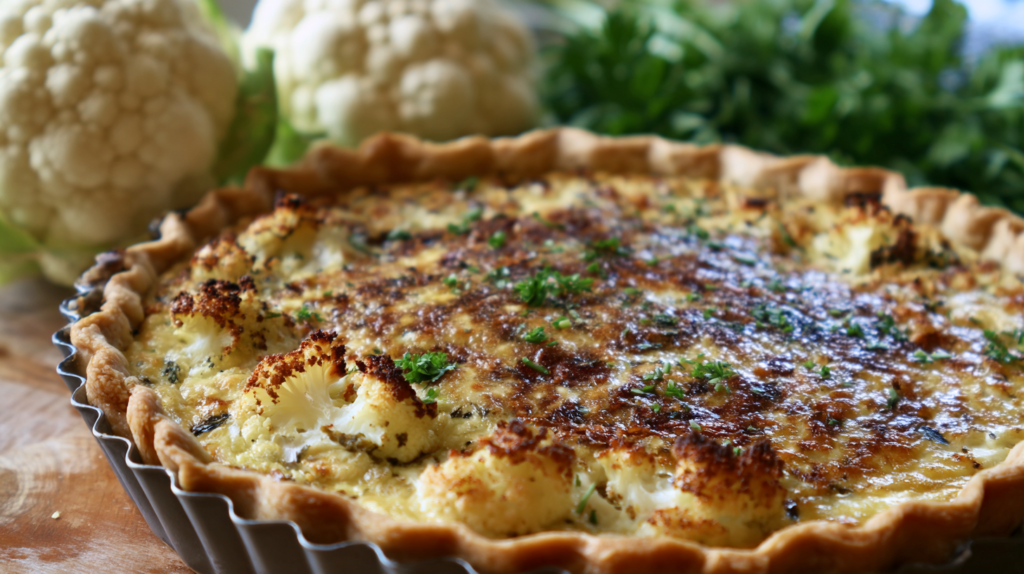
Cauliflower is one of the most versatile vegetables in home cooking. Whether roasted, riced, mashed, or served as a hearty side, it adapts beautifully to a wide variety of dishes. But one of the most underrated uses for cauliflower is in quiche — a creamy, custardy, savory pie that becomes even more satisfying when vegetables are added.
Yet there’s one step many home cooks skip, and it almost always ruins the texture of the dish. When adding cauliflower to quiche, you must precook it. This essential step prevents soggy crust, watery custard, and unevenly cooked vegetables.
In this comprehensive guide, you’ll learn:
-
Why cauliflower must be precooked before it goes into the quiche
-
How its water content affects your crust
-
The best methods for precooking cauliflower
-
Tips for preparing other wet vegetables (spinach, mushrooms, kale, zucchini, etc.)
-
How to build the perfect quiche with maximum flavor and zero sogginess
-
Frequently asked questions about quiche vegetables and moisture control
Let’s dive in.
Why You Should Always Precook Cauliflower for Quiche
1. Cauliflower Is 92% Water — And That Moisture Ends Up in Your Quiche
Cauliflower might seem firm and dense, but it’s surprisingly full of water. Raw cauliflower contains up to 92% water by weight.
When you bake a quiche, all that water cooks out and has nowhere to go except:
-
Into your custard (making it watery and curdled)
-
Into the crust (making it soggy instead of crisp)
A quiche relies heavily on its texture — the creamy custard contrasted with a buttery, crisp crust. Extra water destroys both of these elements.
Precooking evaporates that moisture before the vegetable meets the custard.
2. Cauliflower Takes Longer to Cook Than Eggs
Egg custard cooks quickly. Cauliflower doesn’t.
If you bake cauliflower raw inside a quiche, two things happen:
-
The eggs may fully set before the cauliflower becomes tender.
-
To soften the cauliflower, you end up overcooking the eggs.
Precooking prevents both problems.
3. Precooking Improves Flavor, Browning, and Texture
Raw cauliflower stays pale and somewhat bland, but:
-
Roasting gives it caramelized edges and concentrated flavor
-
Sautéing adds browning and a savory, nutty quality
-
Steaming softens it just enough without turning it mushy
Adding precooked cauliflower means every bite of quiche has flavor and texture — not bland, watery chunks.
How to Precook Cauliflower for Quiche (Best Methods Ranked)
Here are the top techniques, ranked based on flavor, texture, and practicality.
1. Roast the Cauliflower (Best Flavor + Crisp Texture)
Roasting yields the most flavorful quiche, thanks to caramelized edges and deeper taste.
How to Roast Cauliflower for Quiche
-
Preheat the oven to 425°F (218°C).
-
Cut cauliflower into bite-sized florets.
-
Toss with:
-
Olive oil
-
Salt
-
Pepper
-
Optional: smoked paprika, garlic powder, thyme
-
-
Spread on a baking sheet in a single layer.
-
Roast for 20–25 minutes, flipping halfway.
-
Cool slightly before adding to the crust.
Why This Method Works
Roasting removes more moisture than steaming or sautéing. It also adds a golden, slightly crisp texture that contrasts beautifully with the soft custard.
2. Sauté the Cauliflower (Good for Quick Browning)
A great option if you’re short on time or stove-to-quiche cooking is easier.
How to Sauté
-
Heat a pan over medium-high.
-
Add oil or butter.
-
Cook cauliflower florets for 8–10 minutes until lightly browned.
-
Season lightly.
-
Transfer to a towel-lined plate to remove excess oil.
3. Steam the Cauliflower (Fast and Clean)
Steaming keeps the cauliflower subtly flavored and tender.
How to Steam
-
Bring an inch of water to a boil in a saucepan.
-
Add florets to a steamer basket.
-
Cover and steam for 5–7 minutes, until just tender.
-
Spread on a towel to air-dry before adding to the quiche.
Important Note
Steamed cauliflower must dry completely before going into a quiche. Wet cauliflower = soggy crust.
How to Assemble a Cauliflower Quiche Without Sogginess
Once your cauliflower is precooked, follow these steps for a perfect texture.
1. Start With a Par-Baked Crust
Blind-baking is essential.
To Par-Bake a Quiche Crust:
-
Fit dough into the pan.
-
Prick with a fork.
-
Line with parchment paper.
-
Fill with pie weights.
-
Bake at 375°F (190°C) for 12–15 minutes.
-
Remove weights and bake 5 additional minutes.
A par-baked crust forms a barrier that prevents custard absorption.
2. Add Dry, Precooked Cauliflower on the Bottom
This anchors your flavor and distributes it evenly.
3. Pour Custard Over the Vegetables
Basic custard ratio:
-
4 large eggs
-
1½ cups heavy cream or half-and-half
-
Salt + pepper + nutmeg
4. Add Complementary Mix-Ins
Cauliflower pairs beautifully with:
-
Gruyère
-
Cheddar
-
Parmesan
-
Caramelized onions
-
Mushrooms (precooked!)
-
Spinach (drained!)
-
Leeks
-
Bacon, ham, or sausage
-
Fresh herbs like thyme or chives
5. Bake Until Just Set
Bake at 350°F (177°C) for 35–45 minutes, or until the center jiggles slightly.
Other Vegetables That MUST Be Precooked for Quiche
Cauliflower isn’t the only culprit. These vegetables release lots of water when baked:
High-moisture vegetables that must be precooked:
-
Mushrooms
-
Spinach
-
Kale
-
Zucchini
-
Squash
-
Broccoli
-
Peppers
-
Onions
-
Eggplant
-
Leeks
Why?
All of them release enough water to ruin your quiche’s texture.
Vegetables You Don’t Need to Precook
These can be added raw because they have low moisture or cook very quickly:
-
Tomatoes (cherry tomatoes sliced in half)
-
Fresh herbs
-
Scallions
-
Green peas (frozen is fine)
-
Corn kernels
-
Artichoke hearts (drained)
What About Meat and Cheese?
Precook These Meats:
-
Bacon
-
Sausage
-
Ground beef
-
Chicken
-
Ham (optional but improves flavor)
Why Precook?
Raw meats release fat and liquid that ruin the custard’s texture.
Cheeses Safe to Add Raw:
-
Cheddar
-
Gruyère
-
Swiss
-
Feta
-
Goat cheese
-
Parmesan
-
Mozzarella
Cheese adds minimal moisture and melts beautifully.
Pro Tips for a Perfect Cauliflower Quiche Every Time
1. Let cauliflower cool before adding it to the crust
Hot vegetables cause steam, which softens the crust.
2. Drain roasted or sautéed cauliflower on towels
Removes excess oil or steam.
3. Use full-fat dairy for a creamy custard
Low-fat dairy curdles more easily.
4. Add a small amount of cheese under the vegetables
Creates a protective barrier between custard and crust.
5. Rest the quiche before slicing
10–15 minutes lets custard firm up.
Serving Ideas to Elevate Your Cauliflower Quiche
-
Serve warm with a simple green salad
-
Add arugula tossed in lemon vinaigrette on top of each slice
-
Pair with roasted potatoes for a heartier meal
-
Serve with tomato soup for brunch or dinner
Precook Cauliflower for Crisp, Restaurant-Quality Quiche
Precooking cauliflower is the single most important step in ensuring your quiche:
-
Has a crisp crust
-
Has smooth, creamy custard
-
Doesn’t turn watery
-
Cooks evenly
-
Has deeper, richer flavor
Whether you roast, steam, or sauté it, taking this extra step elevates your quiche from average to exceptional.