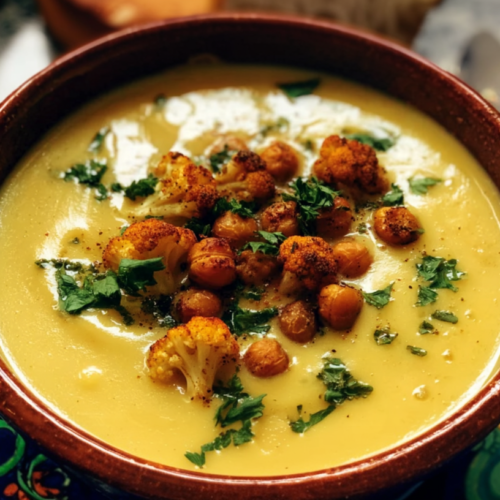
Golden Healing Cauliflower Soup is a creamy, comforting vegetable soup designed to deliver both flavor and nourishment in a simple, approachable way. The soup combines tender cauliflower with warming turmeric, aromatic garlic, and rich cashews to create a smooth, velvety texture without dairy. Its golden color signals its anti-inflammatory profile, while the mild sweetness of cauliflower balances the earthy spice, making it ideal for cozy dinners, light cleansing meals, or healthy weekly meal prep.
Why This Recipe Works
Flavor Layering
This soup builds flavor gradually by sautéing aromatics and spices before simmering. Onion and garlic create a savory foundation, turmeric adds warmth and earthiness, and the natural sweetness of cauliflower softens the spice. Cashews round out the flavor with subtle richness, preventing the soup from tasting flat or overly vegetal.
Technique
Cooking the cauliflower and cashews together allows them to soften at the same rate, ensuring a smooth blend without graininess. Blending while the soup is hot helps emulsify the fats from the cashews and olive oil, producing a naturally creamy texture without added cream or dairy alternatives.
Cooking Logic
The soup uses water instead of stock to keep the flavors clean and focused on the vegetables and spices. Lemon juice is added at the end to brighten the finished soup, enhancing both flavor and aroma without overpowering the turmeric.
Recipe Info
Prep Time:: 5 minutes
Cook Time:: 25 minutes
Total Time:: 30 minutes
Yield:: 6 servings
Category: Dinner / Soup
Cuisine:: International / Plant-Based
Ingredients
2 tbsp (30 ml) extra virgin olive oil
½ medium yellow onion, finely chopped
2 garlic cloves, minced
1 medium head cauliflower (about 5 cups / 500 g florets)
1 cup (140 g) raw cashews
1 tbsp ground turmeric
7–8 cups (1.7–1.9 L) water, divided
2 tsp kosher salt, or to taste
Fresh lemon juice, to finish
Optional toppings:
Crispy roasted chickpeas
Fresh parsley, finely chopped
Extra virgin olive oil, for drizzling
Ingredient Explained Professionally
Olive Oil
Olive oil provides the foundational fat that carries flavor throughout the soup. It gently softens the onion and garlic while helping fat-soluble compounds in turmeric become more bioavailable. Using extra virgin olive oil also contributes subtle fruitiness and heart-healthy fats.
Onion
Onion adds depth and natural sweetness once sautéed. As it cooks, its sharpness mellows, creating a savory backbone that balances the earthy spice of turmeric and the mild flavor of cauliflower.
Garlic
Garlic delivers aromatic intensity and enhances the soup’s savory profile. When gently cooked rather than browned, it provides warmth without bitterness and supports the soup’s immune-boosting character.
Cauliflower
Cauliflower is the structural base of the soup. When cooked until very tender and blended, it creates body and creaminess while remaining neutral enough to absorb spices and aromatics. Its mild sweetness prevents the soup from tasting overly medicinal.
Raw Cashews
Cashews are responsible for the soup’s luxurious texture. When blended, they emulsify with water and olive oil to create a silky, dairy-free creaminess. Their mild flavor enhances richness without dominating the dish.
Turmeric
Turmeric contributes the soup’s golden color and warm, earthy flavor. Beyond taste, it is valued for its anti-inflammatory properties. Cooking it briefly in oil before simmering deepens its flavor and prevents raw bitterness.
Water
Water is intentionally used instead of broth to keep the flavor profile clean and uncluttered. This allows the cauliflower, turmeric, and aromatics to remain the focus without competing background flavors.
Salt
Salt is essential for balancing sweetness and enhancing aromatics. Adding it early helps season the vegetables throughout cooking, while final adjustments ensure precision.
Lemon Juice
Fresh lemon juice is added at the end to brighten the soup and sharpen its flavors. The acidity lifts the richness of the cashews and enhances the turmeric without overpowering the dish.
Optional Toppings
Crispy chickpeas add contrast and texture, parsley provides freshness, and a final drizzle of olive oil reinforces richness and mouthfeel.
Step-by-Step Instructions
Begin by preparing all ingredients before turning on the heat. Finely chop the onion, mince the garlic, cut the cauliflower into evenly sized florets, and measure the cashews, turmeric, and water. Proper mise en place ensures even cooking and prevents overcooking delicate aromatics once the process begins.
Place a large, heavy-bottomed soup pot over medium heat and add the olive oil. Allow the oil to warm for several seconds until it shimmers lightly but does not smoke. Add the chopped onion and stir to coat it evenly in the oil. Cook for 4–5 minutes, stirring occasionally, until the onion becomes soft, translucent, and slightly sweet. Avoid browning, as caramelization would overpower the clean flavor profile of the soup.
Add the minced garlic to the pot and stir continuously for about 30 seconds. The garlic should become fragrant but remain pale. This short cooking time prevents bitterness while allowing the garlic’s aroma to bloom and integrate into the oil.
Immediately add the cauliflower florets, raw cashews, and ground turmeric to the pot. Stir thoroughly to coat the vegetables and nuts in the oil and spices. Cook for 8–10 minutes, stirring frequently, until the cauliflower begins to soften and the turmeric releases its aroma. This step gently toasts the spice and cashews, deepening flavor without scorching.
Pour 4 cups of water into the pot and add the salt. Stir well, scraping the bottom to release any flavorful residue. Bring the mixture to a gentle simmer over medium heat. Once simmering, reduce the heat slightly and cook uncovered for 10–15 minutes, or until the cauliflower is completely tender and easily pierced with a fork. The cashews should also be soft enough to blend smoothly.
Remove the pot from the heat. Carefully transfer the soup to a high-speed blender in batches, filling the blender no more than two-thirds full to prevent overflow. Blend each batch until completely smooth and creamy, ensuring no visible pieces remain. The texture should be velvety and uniform.
Return the blended soup to the pot. Gradually add the remaining water, a little at a time, stirring between additions until the soup reaches your preferred consistency. Some prefer a thicker, spoon-coating soup, while others prefer a lighter, pourable texture.
Taste the soup and adjust seasoning with additional salt if needed. Finish with a squeeze of fresh lemon juice, stirring well to incorporate. The acidity should be noticeable but balanced, lifting the richness rather than dominating it.
Ladle the soup into warm bowls. If using toppings, finish with crispy roasted chickpeas for texture, a sprinkle of fresh parsley for brightness, and a light drizzle of olive oil for added richness. Serve immediately while hot.
Texture and Flavor Profile
This golden healing cauliflower soup delivers a texture that is exceptionally smooth, creamy, and cohesive without the use of dairy. The blended cashews create a naturally emulsified base that gives the soup body and richness, allowing it to coat the palate in a velvety layer rather than feeling thin or watery. When properly blended, the soup has a luxurious consistency similar to a light cream soup, yet remains clean and digestible.
The cauliflower provides a subtle vegetal sweetness that becomes more pronounced once cooked and blended. Its mild flavor allows the other elements to shine while still offering structure and depth. Cashews contribute a soft, buttery mouthfeel and gentle nuttiness that rounds out the soup without overpowering the vegetable base.
Turmeric introduces a warm, earthy bitterness that defines the soup’s golden character. When gently bloomed in olive oil, its flavor becomes more complex and aromatic, avoiding the harshness that can occur if added directly to liquid. Garlic and onion create a savory foundation, delivering umami and aromatic depth that anchors the lighter notes of the soup.
The final squeeze of lemon juice is essential to the overall flavor balance. It brightens the soup, cuts through the natural richness of the cashews, and enhances the perception of salt. This touch of acidity transforms the soup from comforting to vibrant, preventing it from tasting flat or heavy.
Optional toppings add contrast and dimension. Crispy roasted chickpeas introduce a crunchy texture that offsets the soup’s smoothness, while fresh parsley adds a clean, herbal note that reinforces the soup’s freshness. A drizzle of olive oil at the end enhances aroma and reinforces the soup’s silky finish.
Overall, the flavor profile is warm, soothing, and gently spiced, with layered savory notes and a clean, refreshing finish. It is comforting without being heavy, nourishing without tasting medicinal, and elegant enough to serve as both a casual meal and a refined starter.
Tips for Best Results
Use raw, unsalted cashews for the creamiest texture and most neutral flavor. Pre-roasted or salted cashews can introduce unwanted bitterness or excessive saltiness that disrupts balance.
Cut the cauliflower into evenly sized florets to ensure uniform cooking. Uneven pieces can result in inconsistent texture and require longer blending to fully smooth.
Bloom the turmeric in oil with the aromatics before adding water. This step is critical for developing its flavor and preventing a raw, chalky taste in the finished soup.
Blend the soup thoroughly, especially if using a standard blender. Insufficient blending can leave a grainy texture, particularly from the cashews. A high-speed blender yields the smoothest results.
Adjust water gradually after blending rather than adding it all at once. This allows precise control over thickness and prevents diluting the flavor.
Always finish with lemon juice after cooking. Adding acid earlier can dull flavors during simmering and reduce the brightness of the final dish.
Taste and adjust seasoning at the very end. Cashews and cauliflower both mellow salt perception, so final adjustments are essential for balance.
Variations
This golden healing cauliflower soup is intentionally simple, which makes it highly adaptable without compromising its core identity. Variations should enhance the soup’s natural creaminess and warmth rather than mask it.
For a spicier version, a small amount of freshly grated ginger or a pinch of cayenne pepper can be added during the sauté stage. Ginger complements turmeric exceptionally well, adding gentle heat and digestive warmth, while cayenne introduces a sharper spice that contrasts the soup’s creamy base.
For a more savory, umami-forward profile, replacing part of the water with vegetable broth deepens flavor without overpowering the cauliflower. A light broth works best, as heavily seasoned stocks can dominate the soup’s delicate balance.
If cashews are unavailable, blanched almonds or sunflower seeds may be substituted, though the texture will be slightly less rich. These alternatives should be soaked briefly in hot water before cooking to soften their structure and improve blending.
To create a heartier version suitable for a main course, cooked white beans or chickpeas can be blended directly into the soup. This increases protein content and creates a thicker, more filling texture while maintaining a smooth consistency.
For a roasted variation, the cauliflower can be oven-roasted with olive oil and turmeric before being added to the pot. This method introduces caramelized notes and a deeper flavor, resulting in a more complex soup with subtle sweetness.
A coconut-forward variation can be achieved by replacing one to two cups of water with full-fat coconut milk. This pairs naturally with turmeric and garlic, creating a richer, more aromatic soup with a slightly sweeter finish.
Serving Suggestions
Golden healing cauliflower soup works equally well as a light starter or a nourishing main course. Its smooth texture and balanced flavor allow it to fit seamlessly into a variety of meal settings.
As a starter, serve the soup in smaller bowls with a drizzle of olive oil and a sprinkle of fresh herbs. This presentation highlights its elegance and prepares the palate without overwhelming it.
For a main course, pair the soup with crusty bread, flatbread, or seeded crackers to provide textural contrast and additional substance. The bread can be used for dipping, enhancing the soup’s creamy mouthfeel.
For a complete plant-based meal, serve alongside a simple green salad dressed with lemon and olive oil. The acidity of the salad reinforces the brightness of the soup while adding freshness and crunch.
When serving guests, toppings can be offered separately to allow customization. Crispy chickpeas, toasted seeds, or herbs encourage interaction and elevate presentation without altering the base recipe.
This soup also works well as part of a wellness-focused menu, paired with grain bowls, roasted vegetables, or lentil-based dishes that share similar earthy and nourishing qualities.
Storage and Reheating
Golden healing cauliflower soup stores exceptionally well, making it ideal for meal prep and batch cooking.
Once fully cooled, the soup should be transferred to airtight containers and refrigerated for up to four days. The flavors continue to develop over time, often tasting more balanced the following day.
For freezing, portion the soup into freezer-safe containers, leaving space for expansion. It can be frozen for up to three months without significant loss of texture or flavor.
When reheating, warm the soup gently over low to medium heat, stirring frequently to prevent scorching. Avoid boiling, as excessive heat can dull flavors and slightly alter texture.
If the soup thickens during storage, additional water can be added gradually while reheating to restore the desired consistency.
After reheating, finish again with a small squeeze of lemon juice to refresh the flavors before serving.
Nutrition Overview
Golden healing cauliflower soup is designed to be both nourishing and balanced, offering comfort without heaviness. Its nutritional profile reflects a thoughtful combination of vegetables, healthy fats, and plant-based protein, making it suitable for everyday meals as well as wellness-focused eating.
Calories: ~280 kcal per serving
This moderate calorie count makes the soup satisfying without being overly rich, suitable for lunch or dinner.
Carbohydrates: ~22 g
The primary carbohydrate sources are cauliflower and onion, providing slow-digesting carbohydrates that support sustained energy. These carbohydrates are naturally low on the glycemic index, making the soup suitable for balanced blood sugar management.
Protein: ~7 g
Cashews contribute plant-based protein, which supports satiety and muscle maintenance. While not a high-protein dish, the soup offers enough protein to feel filling, especially when paired with bread or legumes.
Fat: ~18 g
Most of the fat content comes from olive oil and cashews. These fats are predominantly unsaturated, supporting heart health and improving the absorption of fat-soluble nutrients such as turmeric’s curcumin.
Saturated Fat: ~3 g
Naturally low, keeping the soup aligned with heart-conscious eating patterns.
Fiber: ~6 g
Cauliflower provides dietary fiber that supports digestion, gut health, and fullness. Fiber also plays a role in stabilizing blood sugar and supporting overall metabolic health.
Sugar: ~4 g
All sugars are naturally occurring from vegetables, with no added sweeteners. This keeps the soup suitable for low-sugar and whole-food eating approaches.
Sodium: ~620 mg (varies by seasoning)
Sodium levels are adjustable, allowing the soup to fit low-sodium dietary needs with minor modifications.
Overall, this soup supports anti-inflammatory eating patterns, plant-forward diets, and nutrient-dense meal planning without sacrificing flavor or texture.
Frequently Asked Questions
Can I make this soup without a blender?
A blender is strongly recommended to achieve the signature creamy texture. Without blending, the soup will remain chunky and lose its defining smoothness.
Is this soup suitable for meal prep?
Yes. It stores well, reheats evenly, and maintains both flavor and texture for several days, making it ideal for weekly meal planning.
Can I use roasted cauliflower instead of raw?
Yes. Roasted cauliflower adds deeper flavor and subtle sweetness. It should be roasted until tender before being added to the pot.
Is turmeric overpowering in this recipe?
When balanced with fat, salt, and lemon, turmeric remains warm and earthy rather than bitter. Adjusting the quantity allows full control over intensity.
Can I substitute the cashews?
Yes. Blanched almonds or sunflower seeds work, though the final texture will be slightly less rich.
Is this soup suitable for children?
Yes. The flavor is mild and comforting. If sensitivity to spices is a concern, turmeric can be reduced slightly.
Can I add protein to make it more filling?
Absolutely. White beans, lentils, or chickpeas can be blended directly into the soup to increase protein and thickness.
Golden healing cauliflower soup is a thoughtfully balanced recipe that delivers comfort, nourishment, and simplicity in equal measure. Its naturally creamy texture, achieved without dairy, highlights how careful ingredient selection and technique can create richness without heaviness. The warm earthiness of turmeric, the subtle sweetness of cauliflower, and the brightness of lemon come together in a soup that feels restorative rather than indulgent.
This recipe works equally well for weeknight dinners, wellness-focused meal plans, and seasonal resets. Its adaptability allows it to fit a wide range of dietary preferences while remaining grounded in whole, accessible ingredients. With minimal effort and maximum payoff, it stands as a reliable staple for anyone seeking food that is both soothing and intentional.
When prepared with care, this soup is more than a simple meal—it is a reminder that nourishing food can be elegant, practical, and deeply satisfying all at once.
Golden Healing Cauliflower Soup

Ingredients
- 2 tablespoons olive oil
- 1/2 medium onion chopped
- 2 garlic cloves minced
- 1 medium head cauliflower cut into florets (about 5 cups)
- 1 cup raw cashews
- 1 tablespoon ground turmeric adjust to taste
- 7 –8 cups water
- 2 teaspoons salt or to taste
- Fresh lemon juice to finish
- Optional Toppings:
- Crispy roasted chickpeas
- Fresh parsley
- Extra olive oil
Instructions
- Heat the olive oil in a large soup pot over medium heat. Add the onion, garlic, cauliflower, cashews, and turmeric. Cook for about 8–10 minutes, stirring often, until fragrant and lightly softened.
- Pour in 4 cups of water and add the salt. Bring to a gentle simmer and cook until the cauliflower is very tender, about 10–15 minutes.
- Carefully transfer the soup to a blender and blend until smooth and creamy, working in batches if needed.
- Return the soup to the pot and add additional water to reach your desired consistency.
- Season with more salt if needed and finish with a squeeze of fresh lemon juice.
- Serve warm, topped with crispy chickpeas, herbs, and a drizzle of olive oil if desired.
Notes